What to Do When the Developer Disputes Your Inspector’s Findings
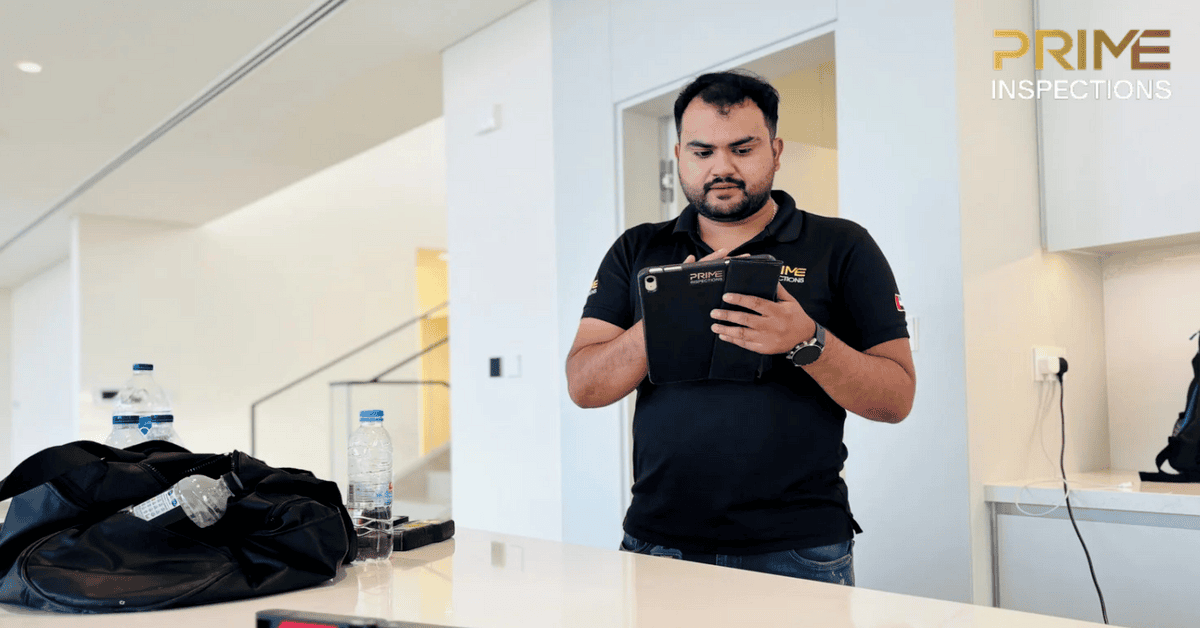
We have had our reports disputed. Every inspection company that has been doing this long enough has. What matters is not whether it happens, because it will happen eventually on any given file. What matters is what happens next, and it is far more predictable than most owners assume.
Here is the situation. You paid for an independent inspection. You submitted the report. The reply came back from the developer’s own engineer, and in more words than this, it says there is no defect. Now you are standing between two technical opinions with no engineering training of your own, and a quiet voice somewhere is asking whether the money you spent on the report was wasted.
We want to answer that voice directly before anything else. Your report was not wasted. But you do need to understand what it is actually for, because that changes how you use it from here.
Does the Developer Have to Accept a Third Party Snagging Report in Dubai?
No. A snagging report is expert evidence, not a binding judgment, and a developer is free to disagree with it. That is not the end of the story, though. If a defect dispute is not resolved commercially, it is typically resolved by a court appointed technical expert, and your documented, instrument backed report is what that expert reads first.
That answer surprises a lot of owners, and understandably so. You would expect a professional, engineer led report to simply settle the matter. It rarely settles it on the spot. What it does is set you up to win the version of the argument that actually counts.
Who Actually Decides Whether a Defect Exists?
This is the reframe that changes how most owners approach the whole situation.
Your Inspector Does Not Decide. Neither Does Theirs.
Your inspector is not a judge, and neither is the developer’s engineer. Both are producing technical opinions and evidence. Neither one has the authority to close the argument on their own, no matter how confident either side sounds in an email.
How Defect Disputes Are Actually Resolved in the UAE
Most disputes move through three possible stages, and the overwhelming majority never make it past the first one.
Stage one: commercial resolution. This is where most snagging disputes end, quietly, through back and forth between the parties. It is by far the fastest and cheapest outcome, and it is what the rest of this article is built to help you reach.
Stage two: regulatory pressure. Filing a DLD or RERA complaint applies genuine pressure and creates a reference number, though it does not itself rule on whether a defect exists or award compensation. We cover exactly what that channel can and cannot do in our guide on what to do when a developer ignores your snag list, so we will not repeat it here.
Stage three: the courts. In UAE construction and defect litigation, the court will routinely appoint an independent technical expert to determine whether a defect exists, what caused it, and whether it affects safety or stability. That expert’s findings are usually decisive in how the case is resolved.
What This Means for You Today
Your report is not trying to win the argument in this email chain with the developer. It is trying to be the strongest, most credible document on the file if a neutral third party ever opens it. Once you see it that way, disputing an email becomes far less stressful, because the report was never meant to win that particular exchange in the first place.
Measurement Versus Interpretation: The Distinction That Wins Arguments
This is, in our experience, the single most useful idea an owner can walk away with from this whole topic.
A measurement can be reproduced. An opinion cannot. Every reading in a proper snagging report is something the developer’s own engineer would have to take an instrument and actively disprove. Every adjective in a weak report is something they can simply disagree with, at no cost to them at all. That difference is the entire reason instrument based inspection exists.
| What the Developer’s Engineer Says | What Kind of Statement It Is | Can It Be Argued? |
| “The wall is not damp.” | Contradiction of a measurement | Only by taking their own reading. Ask for it, in writing. |
| “A 22 percent moisture reading is normal for a new build.” | Interpretation of a measurement | Yes, and it should be. Ask which reference and which standard they are applying. |
| “That tile is within tolerance.” | An unnamed interpretation | Ask whose tolerance, applied to which element, and published where. |
| “The hollow sound is just the screed.” | A legitimate technical possibility | Concede it can be true. Then ask for the extent, the pattern, and a corroborating check. |
| “It is cosmetic.” | A commercial position dressed as an engineering finding | This is worth its own conversation, and we walk through the three tier cosmetic versus functional test elsewhere on the blog. |
The Four Steps That Resolve Most Disputes Without a Lawyer
We walk almost every client through this same sequence, and most disputes never need to go further than step three.
- Ask for the basis in writing. Not a verdict, a basis. Something like: please confirm the technical basis on which item 14 is being rejected.
- Ask for the standard. Which standard or specification is being applied to this element, and where is it published.
- Request a joint site walk. Both technical parties, in the room, at the same time, with their instruments. Put it in writing and propose specific dates.
- Demonstrate, do not argue. A sounding test across a grid. A thermal scan. A level meter on a wet area fall. A moisture reading taken against a dry reference in the adjacent wall. Then watch what happens to the argument.
Why the Joint Site Walk Settles Most Disputes
There is something about two engineers standing in the same room, instrument in hand, that resolves things a week of emails never will. Positions that sound firm on paper tend to soften considerably once both sides are looking at the same reading in real time.

What If the Developer Refuses the Site Walk?
That refusal is itself worth noting, in writing, and it goes on the file. A developer who will not send someone to stand in the room with your inspector and compare readings is telling you something about how confident they actually are in their own position.
When Your Inspector Might Actually Be Wrong
We would rather withdraw a finding that does not hold than defend one that does. Our reports are not marketing documents. They are records, and a record that bends under pressure is worth nothing to anyone, including us.
A hollow ring is not always a failure. Some substrates, membranes, and screed systems legitimately ring hollow by design. Sound is a clue that something warrants a closer look. It is not, on its own, a verdict.
Hairline shrinkage cracking in a new build is very often exactly what it looks like, a normal part of curing rather than a structural concern.
A moisture reading needs a reference point. A number on its own, without a dry area comparison nearby, does not actually tell you much.
What a good inspector does when challenged is reopen the item, re-test it properly, and say so honestly if the original finding does not hold up. An inspector who has never once withdrawn a finding is not being careful. They are being commercial, and that is worth being wary of.
What Makes a Report Hard to Dispute in the First Place
None of this is about winning an argument for its own sake. It comes down to how the report was built from day one.
- Numbered, located items, each with dated photographs
- Instrument readings with a clear reference point, not adjectives like damp or uneven
- A severity classification, so a serious item cannot be quietly bundled in with cosmetic ones and dismissed together
- A direct reference to the specification in your SPA, which is the actual standard you paid for
- An independent, credentialed author with no commercial relationship to the developer at all
- Rectification guidance, which turns a vague complaint into a specific instruction
What Happens When Two Engineers Stand in the Same Room
We worked a file recently where a single disputed item, a suspected waterproofing issue behind a shower wall, had gone back and forth by email for two weeks. The developer’s engineer was professional and confident, and pointed out, reasonably, that he had not personally been on site since the fit-out was completed.
We proposed a joint walk. Both engineers arrived on the same afternoon. Our inspector ran a moisture reading against a dry reference wall two metres away. It took less than a minute. The reading did not match what the developer’s team had expected, and there was a particular quality to the silence that followed it, the kind that comes from a number nobody had planned for.
We want to be fair here, because the point is not that their engineer was wrong to disagree earlier. He had been working from a visual check and a project schedule, not from a reading taken on site that day. The lesson we took from it, and the one we pass on to clients, is that these disagreements are rarely about honesty. They are about what each side actually looked at, and with what.
Frequently Asked Questions
Does a developer have to accept a third party snagging report in Dubai? No. A snagging report is expert evidence rather than a binding judgment. If the disagreement is not resolved commercially, it is typically settled by a court appointed technical expert whose findings tend to carry the most weight.
Who decides whether a defect exists? Neither your inspector nor the developer’s engineer makes the final call on their own. Most disagreements are resolved commercially between the parties. If not, a court appointed independent expert usually makes the determining assessment.
Is a snagging report legally binding? No, it is expert documentation rather than a court order. Its real value is in how strong and credible it looks if the dispute ever needs to go beyond a direct conversation with the developer.
What if the developer’s engineer disagrees with my inspector? Ask for their technical basis and the standard they are applying, then propose a joint site walk with both parties present. Most disputes are resolved at or shortly after that meeting.
What is a court appointed expert in the UAE? In construction and defect disputes, UAE courts routinely appoint an independent technical expert to assess whether a defect exists, what caused it, and its severity. Their report usually plays a decisive role in the outcome.
How do I prove a defect to a developer? Instrument based evidence works better than descriptions. A moisture reading against a dry reference, a thermal scan, or a level reading is far harder to dismiss than a description like “it feels damp” or “it looks uneven.”
Can I get a second opinion on a snagging report? Yes, and a re-inspection or verification visit is a reasonable step if a dispute has stalled. It adds another independent, dated data point to the file.
Does thermal imaging or a moisture reading count as evidence? Yes. Instrument based readings are measurements rather than opinions, which makes them significantly harder for a developer’s engineer to argue against than a general visual observation.
Get a Report Built to Survive a Challenge
If your snagging report has been disputed, the strongest next step is usually not another email. It is a joint site walk or a verification re-inspection that puts real instruments in front of both sides and turns the disagreement into something measurable.
Every inspection we carry out is performed by InterNACHI-certified, RERA-approved engineers using thermal imaging, moisture meters, and non-destructive testing equipment, not just a visual walkthrough. You can start with our new handover snagging service, or if you already have a report and want a second, dated verification pass, read our guide on whether you can re-inspect after the developer fixes your snags. For hidden moisture and leak-related disputes specifically, our water leakage inspection service uses the same instrument based approach described above. You can also read more about our engineers and credentials on the About Us page, or book a joint site walk or re-inspection directly.