What to Do When a Dubai Developer Refuses to Fix Snags

The email lands on a Tuesday afternoon. Every item on your snag list is marked “closed.”
Then you walk into the guest bathroom, and the damp patch is exactly where it was three weeks ago. The wardrobe door still does not sit flush. The AC in the second bedroom still blows warm at two in the afternoon.
You reply. Nothing. You call. Someone tells you the unit was inspected and signed off. Then comes the sentence that drops the floor out from under you.
“Sir, you have already taken handover.”
This is the call we get more than any other at Prime Inspections. Not the pre-handover booking. The one that comes after. The one where the owner has already reported the snags, already been told they are fixed, and is standing in a property that very clearly is not.
So let us deal with it properly. Below is the escalation ladder that actually works in Dubai, the two legal clocks running in your favour right now, the piece of leverage almost nobody mentions, and the five moves that quietly destroy your own case.
Short Answer: What to Do When a Dubai Developer Refuses to Fix Snags
Short answer: If a Dubai developer refuses to fix snags, escalate in writing through a defined ladder rather than arguing verbally. Document the defects with an independent re-inspection report, serve a formal written notice with a deadline, then escalate to the Dubai Land Department and RERA, and finally to the Dubai Courts if required.
Here is the ladder, in order:
- Move every conversation into writing.
- Get an independent re-inspection, also called de-snagging, with instrument evidence.
- Serve a formal written notice with a specific deadline.
- File a DLD Contractual Dispute Inquiry.
- File a RERA complaint through the Dubai REST app.
- Use the DLD Amicable Settlement Centre. It is free, and the outcome is binding.
- File at the Dubai Courts Real Estate Circuit, as a genuine last resort.
One warning before you start. The most common mistake we see is people filing in the wrong place. More on that below, because it can cost you months.
First, Understand Why a Developer Says No (It Is Almost Never a Flat Refusal)
In our experience, a Dubai developer almost never writes the word “no.” You get one of five sentences instead. Each has a specific answer.
That Is Within Acceptable Tolerance
The polite one. It sounds technical, which is exactly why it works.
Sometimes it is legitimate. Minor variance in finish level, or hairline settlement cracking in a new build, can genuinely sit inside accepted tolerance. We tell clients so when it applies.
It is not legitimate when the item fails a level check, a moisture reading, or a thermal scan.
Your counter: tolerance is a measurable claim. Ask them to put the standard in writing, then measure it. The request alone tends to change the tone, because very few customer service teams want to commit a number to email.
You Signed the Handover Certificate
The most intimidating sentence in the process, and the most misunderstood.
Honestly, signing does weaken your position on cosmetic and finishing items, because the certificate usually confirms you accepted the property in its condition that day.
It does not cancel the Defect Liability Period. It does not cancel structural liability under UAE law.
Your counter: the clocks keep running regardless of what you signed. Both are explained below.
That Is Wear and Tear” or “You Caused That
The standard line for AC underperformance, waterproofing failures, and leaks that surface a few months after move-in.
It is a strong argument for one reason only. Most buyers have no dated record of the property’s condition at the moment it was handed over.
Your counter: a dated inspection report from handover day is worth far more than its fee. Without a baseline, this is your word against theirs. With one, it becomes documented condition at the point of transfer.
That Is a Maintenance Item, Speak to the FM Company
The handoff move. Once a building passes to an Owners Association or facilities management company, the developer will try to route your defect there.
A construction defect does not become a maintenance item because a management contract changed hands. Say that back to them, in writing.
We will be straight with you, though. The boundary is genuinely contested for AC, plumbing and waterproofing. Which is exactly why documented condition at handover matters, both in your unit and in the building’s common areas.

It Has Been Fixed (When It Has Not)
What We Actually Find When a Developer Says “Closed”
Across the re-inspections we carry out, there is a fairly consistent pattern worth knowing about.
A genuinely completed fix looks straightforward under inspection. Waterproofing that was actually redone reads correctly on a moisture meter. A repaired electrical connection reads normally under a thermal scan. Nothing to hide, because nothing was rushed.
A cosmetic fix looks fine and reads badly. Fresh sealant and clean tiling over a wall that a moisture meter still says is wet underneath. A tile reset without touching whatever cracked it. Paint over a damp patch instead of repairing the source of the damp.
Then the part nobody says out loud. The same contractor who created the defect is very often the one sent back to close it out. That is not automatically a problem. It does mean a completion notice from that team is a claim, not proof.
Marked as closed but not actually fixed is exactly what a re-inspection after the developer fixes snags is for. Where damp is involved, a Water Leakage Inspection settles the issue because it does not rely on what the wall looks like.
Do You Actually Have a Legal Right to Force the Fix in Dubai?
Yes. And your position is stronger than most buyers realise because two separate legal protection periods are running in your favour at the same time. One of them cannot be waived or signed away.
The Two Clocks: 10 Years Structural, 1 Year MEP
The governing law is Article 40 of Dubai Law No. 6 of 2019 concerning Ownership of Jointly Owned Real Property.
| Defect Category | Developer Liability | Clock Starts From |
| Structural parts of the building | 10 years | Date the developer obtains the completion certificate |
| Mechanical, electrical, plumbing, sanitary and sewerage installations | Minimum 1 year | Date the unit is handed over to the owner |
Read the third column carefully. These two liability periods do not begin on the same date, and many property owners misunderstand this important distinction.
What Counts as “Structural”
Structural defects include:
- Foundations
- Load-bearing walls
- Columns
- Beams
- Concrete slabs
- Ceilings
- Staircases
- Stairwells
- Building façades
If the issue affects the stability or structural safety of the building, it generally falls within this category. These are the types of issues covered during a Complete Building Inspection.
What Counts as an “Installation”
Installation-related defects include:
- Air conditioning systems
- Electrical circuits and distribution
- Plumbing
- Sanitary fittings
- Sewerage systems
Most snagging issues fall into this MEP category. It also has the shorter liability period, which is why delaying action is never a good idea.
The Trap Most Buyers Do Not Know About
If an owner refuses to take possession of the property, the one-year installation liability period may begin from the date of the building’s completion certificate instead of the date the owner eventually accepts handover.
Think about that for a moment.
Delaying handover indefinitely to “protect” yourself may actually reduce the amount of warranty protection you have left.
Refusing handover can still be the right decision in some situations, but it should always be done with a clear understanding of the legal consequences.
Decennial Liability Under the UAE Civil Code (Articles 880 to 883)
There is another layer of legal protection under the UAE Civil Code.
The developer, contractor and supervising engineer are jointly liable for ten years from delivery of the building for:
- Total collapse
- Partial collapse
- Any defect that threatens the stability or safety of the building
This is considered strict liability.
You do not have to prove negligence.
You only need to prove that the qualifying defect exists.
They Cannot Contract Out of It
Article 882 makes any agreement that limits or excludes this liability legally void.
If a developer points to a clause in your Sale and Purchase Agreement claiming their responsibility has ended, that clause does not override the UAE Civil Code for structural defects.
Many disputes change direction once buyers understand this legal protection.
The Three-Year Rule (Article 883)
A compensation claim must be filed within three years of discovering the defect.
This is why the date on your independent inspection report is extremely important.
It establishes exactly when the defect was identified.
The 5% Escrow Retention Almost Nobody Mentions
Under Article 14 of Dubai Law No. 8 of 2007, the escrow agent must retain 5% of the total escrow value after the developer receives the completion certificate.
That money is only released one year after the units are registered in the purchasers’ names.
According to the Dubai Land Department, this retained amount exists to ensure developers or contractors promptly correct defects that appear during the first year after handover.
Why This Changes the Conversation
The developer is not doing you a favour by fixing legitimate defects.
Money has already been withheld specifically for this purpose.
Your responsibility is simply to create a clear, well-documented record of every defect before the applicable liability period expires.
The Gap Everyone Forgets: Cosmetic and Finishing Defects
This is one of the most expensive lessons many buyers learn too late.
Purely cosmetic defects usually fall outside the structural liability rules and may also fall outside the installation liability period.
Examples include:
- Paint imperfections
- Minor scratches
- Small dents
- Cabinet alignment
- Cosmetic finishing defects
Protection for these issues depends largely on your Sale and Purchase Agreement and your pre-handover snag list.
Your pre-handover snag report is often the only opportunity to document these items while you still have maximum leverage.
That is why a professional New Handover Snagging inspection is so valuable before accepting the property.
Step-by-Step: The Escalation Ladder That Actually Works in Dubai
Following the correct order matters.
Skipping steps rarely speeds up the process.
Instead, each stage creates the evidence needed for the next stage.
Step 1: Stop Talking, Start Writing
Move every conversation into email immediately.
Verbal discussions on site are not evidence.
WhatsApp voice notes are not evidence.
“I already told the site engineer” is not evidence.
A professional email creates two important things:
- A documented timeline
- Proof that you attempted to resolve the matter before escalating
Every authority you contact later will expect to see both.
What Your Defect Notice Must Contain
Assign every defect a unique reference number.
For example:
- K1, K2 – Kitchen
- B1, B2 – Bathroom
- M1, M2 – Master Bedroom
Numbering every issue prevents misunderstandings and makes it impossible for a developer to vaguely claim everything has been fixed.
Your notice should also include:
- One clear photograph for every defect
- Exact location of each defect
- Severity level (Cosmetic, Functional or Urgent)
- Requested repair deadline
- Request for written acknowledgement
Maintain a tracking sheet with six statuses:
- Reported
- Acknowledged
- Scheduled
- Fixed
- Re-tested
- Closed
Never mark an item as Closed until it has been independently re-tested.
Step 2: Get an Independent Re-Inspection (De-Snagging) Report
Why the Contractor’s Own Sign-Off Is Not Evidence
A completion notice from the same contractor who originally created the defect is simply a claim.
It is not independent proof that the issue has actually been resolved.
That is why independent Contractor Work Inspections exist.
What Instruments Change the Argument
Professional inspections rely on measurable evidence instead of visual opinions.
Useful inspection tools include:
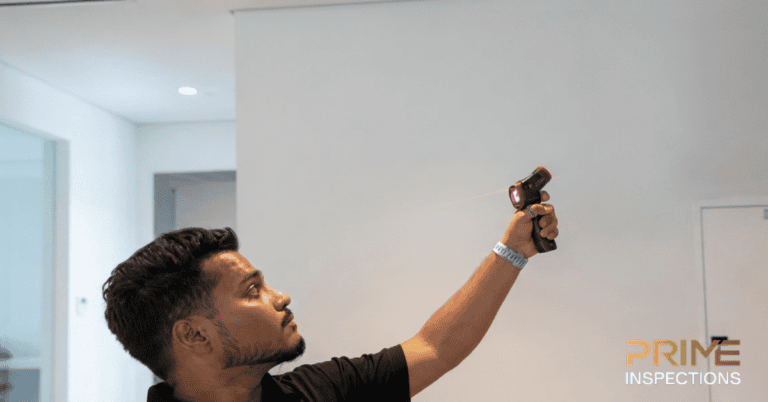
- Thermal imaging for hidden moisture, insulation issues and electrical overheating.
- Moisture meters for detecting dampness behind walls and tiles.
- Level and slope meters for balconies, bathrooms and flooring.
- Socket and circuit testers for identifying reversed polarity and missing earth connections.
One sentence sums it up perfectly:
A photograph shows an opinion. A measurement shows a fact.
Step 3: Serve a Formal Notice, Not a Complaint
A complaint asks.
A formal notice states.
The difference matters. A formal notice sets a deadline, cites the legal basis of your request, and clearly explains what action you will take if the deadline passes.
Treat it like the opening page of a legal file.
Escalation Email Template
Subject: Formal Notice of Unrectified Defects – Unit [X], [Project Name], SPA Ref [Y]
Dear [Developer Customer Service or Handover Team],
Further to my snag list submitted on [Date], and your notification dated [Date] confirming that all reported items were closed, an independent re-inspection was carried out on [Date]. The attached report confirms that the following defects remain unresolved: [List outstanding item numbers].
These defects fall within the developer’s liability under Article 40 of Dubai Law No. 6 of 2019. I request written confirmation of a rectification schedule for every outstanding item within seven working days of this notice.
If no schedule is provided within that period, I will proceed with filing a Contractual Dispute Inquiry through the Dubai Land Department and submit a complaint through the Real Estate Violations System.
Please treat this email as formal notice and kindly acknowledge receipt in writing.
Regards,
[Your Name]
[Unit Number]
[Emirates ID or Passport Number]
[Oqood or Title Deed Reference]
This template provides a practical structure only. It is not legal advice. If your claim involves substantial financial value, have a UAE-licensed lawyer review your notice before sending it.
Step 4: File a DLD Contractual Dispute Inquiry
The Dubai Land Department provides an official Contractual Dispute Inquiry service.
You can file the request through:
- The DLD website
- The Dubai REST App
- A Real Estate Services Trustee Centre
The inquiry results in an official DLD letter that explains the regulatory position regarding your dispute.
Keep this letter.
It becomes valuable supporting evidence for every stage that follows.
Step 5: File a RERA Complaint Through the Dubai REST App
Submit your complaint through the Real Estate Violation Complaint service available in the Dubai REST App.
You will typically need:
- Emirates ID
- Your personal information
- Developer details
- A concise description of the violation
- Supporting documents in JPG, PNG, or PDF format
Attach as much supporting evidence as possible, including:
- Sale and Purchase Agreement (SPA)
- Oqood or Title Deed
- Payment receipts
- Original snagging report
- Developer’s completion notification
- Independent re-inspection report
- Complete email correspondence
Once submitted, you will receive a complaint reference number that allows you to track the case through the DLD website or Dubai REST App.
An initial administrative response is often issued within approximately five business days.
What RERA Will—and Will Not—Do
RERA can:
- Investigate complaints
- Mediate disputes
- Apply regulatory pressure on developers
That pressure is often enough to encourage a developer to complete outstanding work.
However, RERA is not a court.
It cannot:
- Award financial compensation
- Order refunds
- Enforce contractual performance between private parties
Those outcomes come through either the DLD Amicable Settlement Centre or the Dubai Courts.
Fees and procedures change from time to time, so always confirm the latest requirements directly with the Dubai Land Department before filing.
Step 6: The DLD Amicable Settlement Centre (A Free and Underused Option)
Many buyers never reach this stage simply because they do not know it exists.
The DLD Amicable Settlement Centre offers several important advantages:
- Mediation is completely free.
- Mediators have direct access to DLD property records and project databases.
- They can verify registration details, payment history, project status and completion records immediately.
- Any settlement reached here is legally binding and enforceable without requiring a court judgment.
For many property defect disputes, this is where the process successfully ends.
Step 7: The Dubai Courts – Real Estate Circuit
Court proceedings should always be considered the final option.
They are generally slower, more expensive and more formal than the previous stages.
There are two important facts every property owner should understand.
The Court Will Appoint an Independent Engineer
Construction defect cases almost always involve a court-appointed engineering expert.
That expert:
- Inspects the property
- Reviews all available evidence
- Produces an independent technical report
In many cases, that report becomes the foundation of the court’s final judgment.
Think about what this means.
An independent snagging or re-inspection report prepared today is often very similar to the type of technical evidence the court-appointed engineer will later prepare—only much earlier and at a significantly lower cost.
This is one reason why many disputes never need to reach court.
Everything Must Be in Arabic
Documents submitted to the Dubai Courts or the Dubai Land Department must either:
- Be written in Arabic, or
- Include a certified Arabic translation.
If you are an overseas property owner, this translation requirement often becomes one of the most time-consuming parts of the process.
The Mistake That Gets Cases Rejected
Many buyers file complaints with the wrong authority.
The Rental Disputes Settlement Centre (RDSC) deals only with disputes between landlords and tenants.
It does not have jurisdiction over disputes between buyers and developers.
Buyer-versus-developer defect claims should be handled through:
- Dubai Land Department (DLD)
- RERA
- DLD Amicable Settlement Centre
- Dubai Courts (when necessary)
The only common exception is where your Sale and Purchase Agreement contains a valid arbitration clause requiring disputes to be resolved through arbitration, such as the Dubai International Arbitration Centre (DIAC).
Always review your contract before starting legal proceedings.
If you are unsure which stage applies to your situation, speaking with an experienced inspection company or qualified UAE real estate lawyer can save considerable time and expense.
What NOT to Do (The Five Mistakes That Can Weaken Your Case)
Do Not Sign the Handover Certificate Just to Get the Keys
If someone tells you,
“Sign now. We’ll fix everything later.”
Treat that as a warning rather than reassurance.
Your negotiating power is strongest before you accept handover.
Once you sign, much of that leverage disappears.
Do Not Repair the Defects Yourself and Send the Developer the Bill
Although this may seem like the quickest solution, it usually creates additional problems.
In most situations, the developer has the legal right to carry out repairs using their own contractors.
Hiring your own contractor without written approval may leave you responsible for the full repair cost while giving the developer an argument that you interfered with the rectification process.
Do Not Rely on WhatsApp Voice Notes
Voice notes are not reliable evidence.
Verbal conversations on site are not reliable evidence.
Always communicate through:
- The developer’s official customer portal
- Other written communication channels
Every important discussion should leave a documented record.
Do Not Wait Until the End of the Defect Liability Period
The one-year liability period is not extra time to delay action.
Waiting until month eleven often leaves:
- Very little time for repairs
- Very little time for re-inspection
- Very little leverage if disagreements arise
The liability clock continues running while negotiations take place.
Do Not Accept “Fixed” Without Verification
A completion notice is simply a statement from the contractor.
It is not proof that the defect has actually been resolved.
Always verify repairs through an independent re-inspection before considering the issue closed.
Prime Inspections & Snagging The Binary by Omniyat, 1914-203, Dubai, United Arab Emirates Phone: +971 50 602 1830 Email: connect@primeinspections.ae Book a Contractor Work Inspection