How to Stage Snagging for a Phased Handover Community

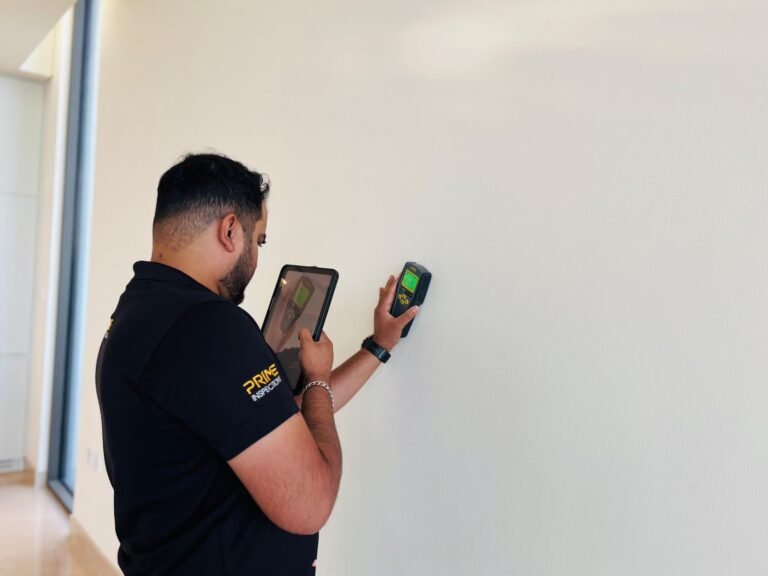
It was 9:15 on a Saturday morning in February when Farhan reached a three bedroom townhouse in one of the first finished clusters of The Valley, off the Al Ain Road.
Across the access road, the next cluster was still a row of grey blockwork, with a mixer truck turning at the gate.
The owner met him at the door with a question we hear often in a phased handover: “Should we snag now, or wait until all this is finished?”
The floors had a fine film of dust. The sliding door track crunched when Farhan opened it.
The honest answer is both. Snag now, and plan to look again.
The short answer: in a phased handover, snag in three stages. Do a full handover snagging before you accept the keys, a re-inspection once the developer’s fixes are done, and a final check about two months before the defects liability period ends, after nearby construction has calmed down. Record a dated baseline at the first visit.
What is a phased handover, and why does it change snagging?
A phased handover simply means the community is delivered in parts. Your home is finished, but the place around it is not.
That is a normal way to build. It only changes how you plan your inspections.

How large Dubai communities hand over in clusters
In big master communities, the master developer builds roads, utilities and security first. Then the early clusters are handed over, while later phases are still going up.
Communities such as The Valley and Emaar South, both by master developer Emaar Properties, have been delivered this way, cluster by cluster. Pools, parks and community centres often open in stages too.
Developers say this openly on their own blogs. It is not a warning sign. It is how large projects in Dubai are sequenced.
Why one snagging visit is not always enough
On handover day, your unit may be in good order. Then, in a phased handover, the next six to twelve months of construction nearby put pressure on it.
There is dust, vibration, road work and new connections to the network. Meanwhile, your defects liability period keeps running.
One visit records the unit on one day. In a phased community, things keep changing after that day.
What do later phases do to a home that is already handed over?
Here is what we see most often in early clusters after a phased handover. None of it means the developer did anything wrong. It is what living next to a building site does.
Construction dust
Fine dust gets into sliding door tracks, window seals, AC filters, fan coil coils and drain grates.
It also hides things. A thin film over paint, tiles and grout makes small defects hard to see.
We clean the sliding door tracks and AC filters before we test them. Dust can make a good track feel bad and a bad seal look fine. If you can, ask the developer to clean the unit before the inspection too.
Vibration and settlement nearby
Piling, ground compaction and heavy vehicles all create vibration. Later, hairline cracks can appear over doors, windows or along stair landings.
We cannot say what caused a crack from one visit. Normal drying and early settlement also play a part.
What we can say is that without a dated baseline, it is hard to prove a crack was not there at handover. If you see cracks, this guide on how to tell cosmetic cracks from structural ones is a good first read.
Roads, landscaping and drainage levels
Roads and landscaping are often finished after the first families move in. When they are, the ground levels around your plot can change.
After rain, water may start to collect at the back gate or run toward the garage.
That is why we note gully positions and plot edge levels on the first visit. It gives you something to compare against later.
Utilities that change as phases connect
Water pressure can vary while new phases are connected to the network. Street lighting may be partial for a while, and access roads may be temporary.
Recording your water pressure at handover lets us compare it later. Supply can vary while new phases are connected, so one low reading is not always a defect.
What does a three-stage snagging plan look like?
This is the plan we suggest to early cluster owners. It fits most phased handover communities.
| Stage | When | What we check | Why it matters |
| Stage 1: Handover snagging | Before you sign acceptance, with DEWA and cooling live | Full 250+ checkpoint inspection, thermal imaging and moisture testing, a dated baseline record and a separate boundary log | Sets the starting point for everything after |
| Stage 2: Re-inspection | After the developer says the snag list is closed | Every item checked against the first report, plus anything new | Confirms the fixes are real |
| Stage 3: Pre-DLP check | About two months before the DLP ends, ideally after the next cluster’s heavy works | Cracks, drainage, sealants, AC and water pressure, compared with the baseline | Catches what construction and the first summer brought |
Stage one: snag fully, even with dust around
In a phased handover, please do not wait for the dust to settle before snagging. Your one-year clock is already running.
Ask the developer to clean the unit and to have DEWA and cooling live on the day. Then do a full handover snagging inspection before you sign anything.
An investor with a tenant waiting gains the most here. A clean first report makes the rest of the year far easier.
Stage two: check the fixes, not the promises
“Closed” on a snag list does not always mean fixed. Some items are patched, some are skipped, and some come back.
A short visit to re-inspect after the developer fixes snags checks every item against the first report. It is booked as a separate visit, so please ask for the fee when you book.
Stage three: time it to the DLP and the neighbours
Put your DLP end date in your calendar on the day you sign. Book the final check about two months before it.
That leaves time to get the report, send it to the developer and receive an acknowledgement before the period closes. If the next cluster’s heavy works are finished by then, even better.
If you live abroad, this one date matters more than any other. When your handover notice arrives, book stage one and send us your DLP end date, and we will plan stage two and three around it.
What should you record at handover in a phased community?
Most reports describe defects. After a phased handover, you also need a record of what was fine.
The baseline record
This is the part owners almost skip, and later wish they had not. On the first visit we record:
- Every wall and ceiling, photographed with the date and room name
- Close-ups of door heads, window corners and stair landings, where cracks usually appear first
- External walls and the boundary wall
- Plot edge and threshold levels at gates and the garage
- Gully grates and drain covers, front and back
- Water pressure at a set outlet
- DEWA and cooling meter readings
- AC supply air temperature in each room
We archive this with your report. It costs an extra half hour on the day. It can save months of argument later.

The boundary log: what is not your unit
Some problems sit outside your unit. Street drains, kerbs, the community boundary wall, streetlights, shared landscaping and road levels all fall into this group.
If you put them on your unit snag list, the developer’s handover team will often reject them or pass them on. They go to a different desk.
So we keep them on a separate, dated list. You then send it to community management or the master developer’s customer care. If you are unsure where the line falls, here is our note on whether common areas count in a snagging inspection.
If you want a dated baseline of your home on handover day, just ask for it when you book.
When does the defects liability period start in a phased project?
This is the question behind most of the worry in a phased handover. The short version: it is your unit’s clock, not the community’s.
Your unit’s clock, not the community’s
Under Article 40(b) of Dubai Law No. 6 of 2019, the developer is responsible for defects in mechanical, electrical, sanitary and sewerage installations for one year from the date your unit is handed over. If the owner delays taking possession, the period starts from the completion certificate instead.
Article 40(a) covers structural defects for ten years from the completion certificate.
Neither depends on when the last cluster is finished. Check your SPA and assume the earlier date applies.
What the law says about phases and owners committees
The same law deals with a phased handover directly. Article 20(c) says that where a project is developed in phases, a Building Management Regulation is issued for each developed part.
Article 22(b) says an Owners Committee forms once at least 10 percent of the units are registered. Under Article 30(d), the developer manages the property until RERA appoints a management company.
In practice, this means common areas in early phases usually sit with the developer for a while. Villa and townhouse communities may also have master community rules. Your community’s rules and your SPA decide the details.
The line we always add
We are inspectors, not lawyers. We record the condition of your home; we do not give legal advice.
Speak to a lawyer for your specific contract.
What happened in the townhouse at The Valley
Back to that February morning.
Farhan did a full handover snagging, then spent an extra half hour on the baseline. Every wall and ceiling was photographed with the date. He noted the boundary wall and plot edge levels and checked the gully grates front and back. He cleaned the door tracks and AC filters before testing them, so dust would not hide anything.
The re-inspection came a few weeks later. Two items had been reopened. On his next check, Farhan confirmed both were properly fixed.
Ten months later, the neighbouring cluster was finished and the road resurfaced. The owner called us back.
There were two hairline cracks over a door head, and water pooling by the back gate after rain.
Because the baseline photos showed the door head clean at handover, the cracks went to the developer as a defect within the DLP, not a debate. The pooling turned out to be a community drain issue. It went to community management instead.
Our Engineering Manager, Mohammed Nadeem Maldar, says it this way: “In a new community the most valuable photo is the boring one: a clean wall, dated, on the day you took the keys.”
Are unfinished amenities and common areas snags?
Owners ask this a lot in the first year of a phased handover. The answer depends on whether something is late or faulty.
Delayed vs defective
A pool, park or community centre that opens later than you hoped is a delay, not a snag. That falls under your SPA and the developer’s published timeline.
Once a facility opens, though, a defect in it is a real issue. Report it to community management with photos and a date.
Where to send what
Unit defects go to the developer’s handover or customer care team. Common area issues go to community management or the master developer.
If a dispute cannot be settled, Dubai Land Department and RERA are the usual route. Under Article 42 of Law No. 6 of 2019, disputes about jointly owned property are heard by the Rental Disputes Settlement Centre. Speak to a lawyer for your specific contract.
Frequently Asked Questions
Should I snag if the rest of the community is still under construction?
Yes. Your defects liability period runs from your own handover, not from the end of the community’s construction. Snag fully before you accept the keys, ask for the unit to be cleaned of dust first, and plan to look again once nearby works have eased.
How many snagging inspections do I need in a phased community?
In a phased handover we suggest three: the main handover snagging, a re-inspection after the developer’s fixes, and a final check about two months before the DLP ends. The second and third visits are shorter. Each later visit is booked separately, so please ask for the fee when you book.
Does the DLP start when the community is finished?
No. Under Dubai Law No. 6 of 2019, the one-year period for installations runs from your unit’s handover, or from the completion certificate if you delay taking possession. Check your SPA, assume the earlier date applies, and speak to a lawyer for your specific contract.
Can construction next door cause cracks in my home?
It can contribute, along with normal early settlement and drying. We cannot say the cause from one visit. What protects you is a dated baseline: if the wall was photographed clean at handover, a later crack inside the DLP can be raised as a defect.
Who fixes common area defects in a new community?
Usually the developer or its community management team, through a different channel from your unit snag list. Keep a separate dated log of street drains, boundary walls, kerbs and shared landscaping, and send it to community management or the master developer’s customer care.
When should I book the final check before the DLP ends?
About two months before your DLP end date. That leaves time to receive the report, submit it to the developer in writing and get an acknowledgement before the period closes. If heavy construction nearby is still running, book it as late as that timing allows.
Will construction dust affect my snagging inspection?
It can hide fine defects in paint, grout and tiles, and make door tracks and AC units behave badly. Ask the developer to clean the unit before the inspection. On the day, we clean tracks and filters before testing so dust does not distort the results.
Can I refuse handover because the community is not finished?
That depends on your SPA and the law, and it is a question for a lawyer, not an inspector. What we can do is record the unit’s condition and any unfinished items clearly, so you have evidence for whatever you and your lawyer decide.
Plan your three stages before you collect the keys
In the townhouse at The Valley, the developer repaired the cracks before the DLP ended. The drain took longer, because it sat with a different team, but it was logged and dated in time.
The owner told Farhan the second and third visits were the ones he almost skipped. We share this because most of what goes wrong after a phased handover happens after the first snag list is closed.
If your cluster is ready before the rest of the community, book stage one now and tell us your DLP end date. Farhan or Malik will plan stage two and three around it, and every report arrives within 24 to 48 hours. We inspect and report; we do not do the repairs.
Handover snagging starts from AED 999 for an apartment, AED 2,799 for a townhouse and AED 3,999 for a villa, excluding VAT. Our RERA certified team has completed 73,000+ inspections from our Business Bay office. When you are ready, you can plan your three-stage snagging with us.