How Long Is the Defects Liability Period in Dubai?
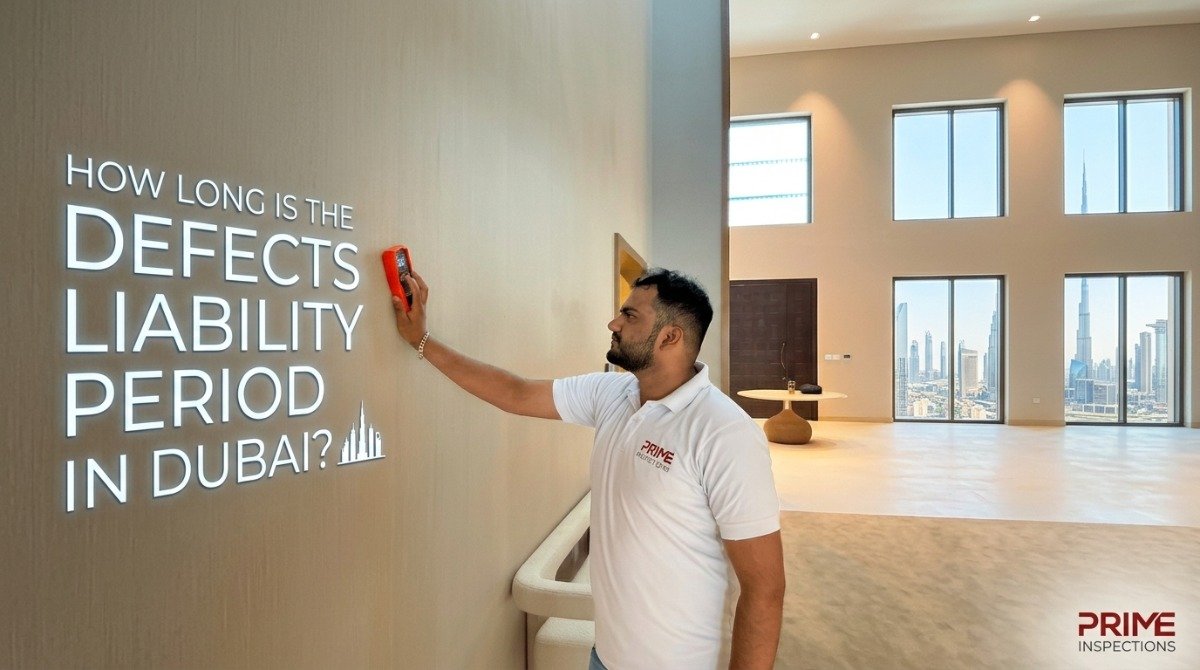
It was not yet eight in the morning in Town Square, and the humidity was already fogging Malik’s sunglasses.
The family had lived in their three bedroom townhouse for eleven months. The mother had found the handover letter in a drawer the night before and sent us a WhatsApp message: “Is our warranty one year from when we got the keys, or from when the building was finished? And is it too late?”
That is the most common question we get about the defects liability period in Dubai. And right now, a lot of owners are asking it. Our engineering manager, Eng. Mohammed Nadeem Maldar, told Khaleej Times that 65,000 apartments and 12,500 villas are expected to enter the Dubai market before the end of 2026. Many of those owners are inside year one today.
Here is the clear answer, then the detail.
Short Answer: How Long Is the DLP in Dubai?
In Dubai, the defects liability period is one year for installations such as plumbing, electrical and AC works, counted from handover of your unit, and ten years for structural defects, counted from the building completion certificate. Both come from Article 40 of Dubai Law No. 6 of 2019. Your SPA can add more, never less.
Not sure which date your year runs from? Send us your handover letter on WhatsApp at +971 50 602 1830 and we will tell you what to look for.
The Two Windows at a Glance
| Window | What it covers | How long | Starts from |
| Installations | Mechanical, electrical, sanitary and sewerage installations | One year | Handover of the unit, or the completion certificate if the owner does not take possession |
| Structural parts | Structural defects in the building | Ten years | Completion certificate of the project |
Source: Article 40 of Dubai Law No. 6 of 2019.
What Each Window Covers
The two windows cover very different things, so it helps to look at each one separately.
The One Year Window: Installations
Article 40(b) covers defective installations. In plain English, that means mechanical and electrical works, sanitary and sewerage installations and similar installations.
In a Dubai home, that typically includes AC units and ducting, water heaters, pumps, drainage, wiring, sockets and distribution boards.
Finishes are not listed in the law text. In practice, the developer’s warranty schedule and your SPA usually include finishing defects such as paint, tiles and joinery, so read both.
The DLP in Dubai does not cover damage after handover or normal wear and tear. Scuffs from movers or a drain blocked by misuse are not defects.
The Ten Year Window: Structural Parts
Article 40(a) makes the developer liable for structural defects for ten years from the completion certificate. This is the 10 year structural warranty Dubai owners often hear about.
There is also a federal rule. Decennial liability in the UAE, which covers the contractor and engineer, now sits in Articles 821 to 824 of Federal Decree-Law No. 25 of 2025, in force from 1 June 2026. These replaced Articles 880 to 883 of the 1985 Civil Code. They cover collapse and defects that threaten structural integrity and safety. A claim must be brought within three years of the collapse or the discovery of the defect.
Not every crack qualifies. Read more about structural defects after handover.
What Your SPA Can Add
Article 40(c) keeps any other rights you have under other legislation. Article 40(d) makes any later agreement that contradicts Article 40 void.
So the developer warranty in Dubai can only add to your cover. Your SPA may include item warranties, such as waterproofing or manufacturer warranties on appliances. Check the warranty clause and any handover warranty schedule.
When Does the DLP Start?
There are usually three dates in front of an owner. Which one counts?
In Town Square, the mother had three documents on the kitchen table: the handover letter, the SPA and a notice about the community’s completion. Three documents, three different dates.
What the Law Says
Article 40(b) says the one year runs from handover of the unit to the owner. If the owner refrains from taking possession for any reason, it runs from the completion certificate instead.
The ten year window always runs from the completion certificate.
Why You Will Hear Different Dates
Some commentary, and some SPAs, count the one year from the building completion certificate. This is more common in older projects or where handover dragged on for months.
Our practical advice is simple. The 10 year structural period runs from the building completion certificate; commentary differs on when the 1 year period starts, so assume the earlier date.
Planning around the earlier date means you never discover too late that the developer counted differently.
How to Find Your Three Dates
- Handover date: your key handover form or handover letter
- Completion certificate date: ask the developer or the Management Entity
- SPA warranty clause: your sale and purchase agreement
For the Town Square family, the completion date was earlier than their handover. We told them to plan around that earlier date. It gave them a few weeks less than they had assumed, which was exactly why it mattered.
Common Parts, Villas and Resale
A few situations need a separate note.
Common Parts Versus Your Unit
Under Article 9 of Law No. 6 of 2019, your unit includes the internal connections serving it. Under Article 7(a)(6), services serving more than one unit are common parts.
Defects in common parts go through the Management Entity and the Owners Committee. Read more about common areas and how they fit into an inspection.
Villas and Townhouses
Law No. 6 of 2019 is the law on jointly owned property. Townhouses and villas inside master communities are often covered through the master project framework.
A standalone villa’s warranty can depend more on the SPA and the federal code. Check your SPA and ask the developer in writing which warranty applies to your home.
If You Sell Inside the Window
Ask the developer in writing before the sale, and take advice. Separately, a buyer has the seller’s one year warranty for a latent defect under Federal Decree-Law No. 25 of 2025, running from delivery, not discovery.
Snagging Versus the DLP
Snagging is the inspection at handover, which we cover through our handover snagging service. The DLP is the period of liability after it. One feeds the other: a good snag list at handover makes the year that follows much easier.
Practical Example: What Month Eleven Looks Like
In Dubai, the first full summer is the real test. Heat, humidity and constant AC use show problems that were invisible on handover day.
These are the defects we most often find around month eleven:
- AC condensate trays overflowing into false ceilings
- Chilled water pipes sweating where insulation is missing
- Shower waterproofing letting water into the ceiling below
- Balcony drains with the wrong fall, leaving water ponding
- Sealant shrinking around windows
- Hairline cracks along plaster joints
If you already see a stain overhead, read our guide on damp on a ceiling.
Tenants are often the early warning. A tenant’s complaint about a musty smell or a dripping vent is worth taking seriously while the window is still open.
Most of these do not show in month one. Ask us to check before your window closes.
What We Do in the Last Weeks of Year One
Back in Town Square, Malik ran the thermal camera across the ceilings and wet area walls.
Two findings mattered. There was a cool, damp shape on the ceiling below the upstairs shower, where the waterproofing was letting a little water through. And one AC unit’s condensate tray was overflowing into the false ceiling.
Neither problem was visible yet. The thermal camera saw them because the first Dubai summer had already done its work. That is why August was the right month to look.
There were also a few ordinary items: a loose stair handrail bracket and a garden tap with low pressure.
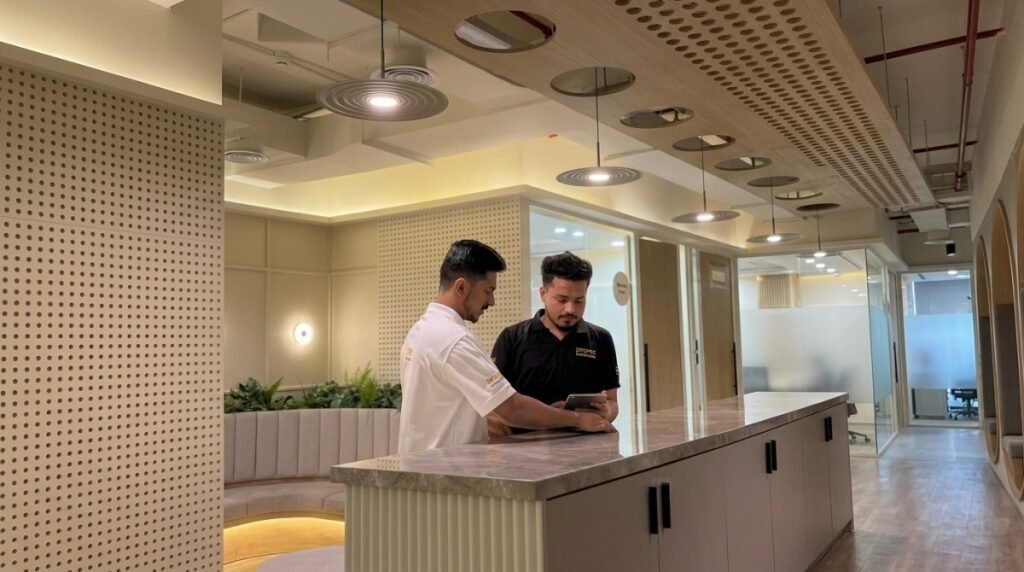
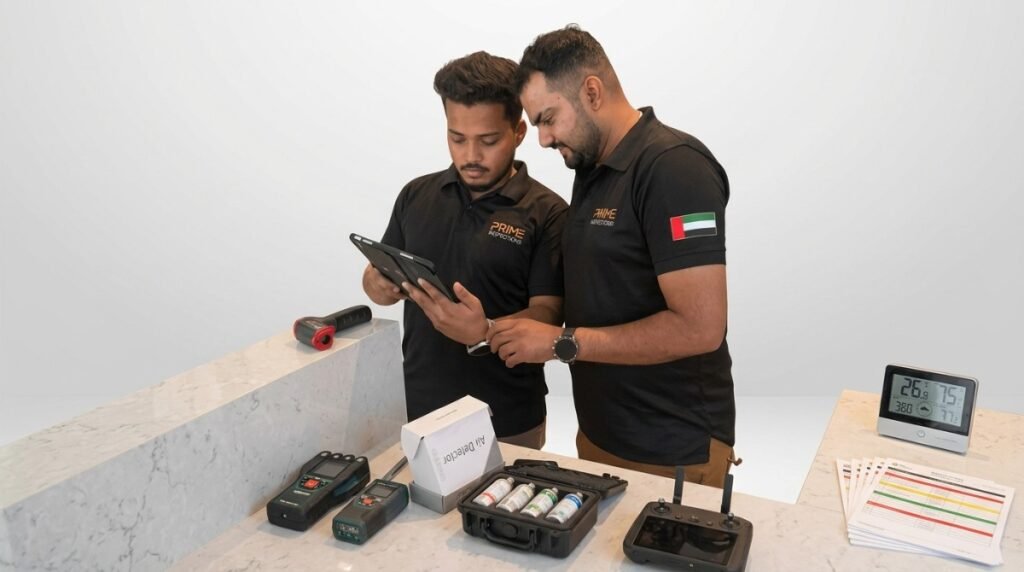
Our DLP inspection is a full walkthrough near the end of the one year window. We use thermal imaging for moisture ingress, electrical testing for wiring faults, and check for poor workmanship. The report arrives within 24 hours, in time to send to the developer. The fee is quoted on unit size before the visit.
The family’s report went to the developer within the window. The developer accepted the shower and AC items, and the handrail bracket was tightened on the same visit. They still needed one follow up to get the false ceiling tile replaced.
We do not repair and take no developer commission, so the report only lists what is really there.
Book a DLP inspection in the last weeks of year one. Report within 24 hours.
What Happens When the DLP Ends?
When the one year window closes, the developer’s cover for installations ends. Structural and latent defect routes may still remain, and the cause of a defect decides who pays.
If your window is closing soon, read what to do in the last six weeks of your DLP.
Frequently Asked Questions
How long is the defects liability period in Dubai?
One year for installations such as plumbing, electrical and AC works, from handover of your unit. Ten years for structural defects, from the building completion certificate. Both come from Article 40 of Dubai Law No. 6 of 2019, and your SPA can add more.
Does the DLP start from handover or the completion certificate?
The law says the one year runs from handover of the unit, or from the completion certificate if the owner does not take possession. Some commentary counts it from the completion certificate, so plan around the earlier of the two dates.
Is structural damage covered for ten years in Dubai?
Yes, structural defects are covered for ten years from the completion certificate under Article 40(a). Federal decennial liability also applies to the contractor and engineer, with claims due within three years of discovery. Not every crack counts as structural.
Does the DLP cover common areas like the lobby and pool?
Common parts are covered too, but defects there are reported through the Management Entity and the Owners Committee, not by individual owners alone. Services serving more than one unit count as common parts under Article 7(a)(6).
Can the defects liability period be extended?
The law sets a minimum. Your SPA or a written agreement with the developer can give longer cover, but an extension is not automatic. If you need more time for a specific issue, ask the developer in writing and keep the reply.
Does the DLP apply to villas and townhouses?
Villas and townhouses in master communities are often covered through the master project framework. A standalone villa’s cover can depend more on the SPA and the federal code. Ask the developer in writing which warranty applies to your home.
Does the DLP pass to a new owner if I sell?
Ask the developer in writing before the sale and take advice, because it depends on the documents. Separately, the buyer has the seller’s one year latent defect warranty under Federal Decree-Law No. 25 of 2025, running from delivery.
Know Your Date, Then Use It
The defects liability period in Dubai is only useful if you know when it ends and use it before then.
As Eng. Mohammed Nadeem Maldar puts it: “Buying a home in the UAE is one of the biggest investments a family or an investor will ever make.”
Know your date, then use it. WhatsApp +971 50 602 1830 or email connect@primeinspections.ae. Your report arrives within 24 hours. We hold a 4.9 star Google rating, and our team are engineers, not technicians.