How Long Is the Defects Liability Period in Dubai?
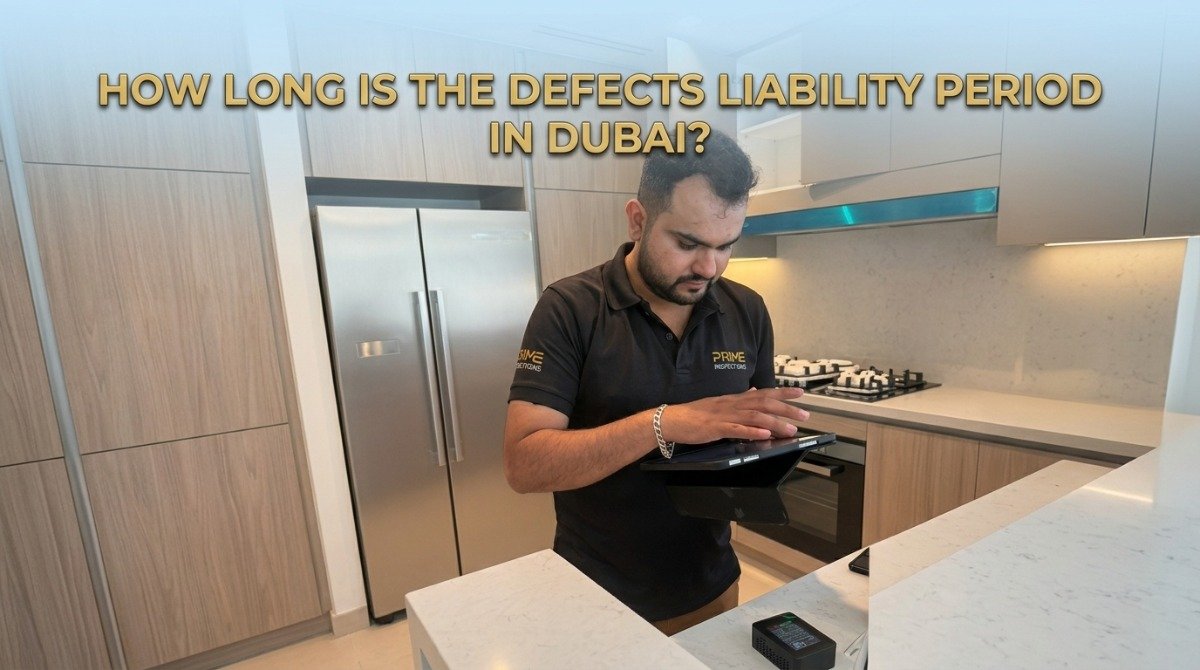
He had moved the sofa the night before so we could see the whole corridor wall. The developer’s email was still open on his phone: the DLP has expired.
It was a Saturday in November in Dubai Silicon Oasis. A two bedroom apartment on the fourth floor of a mid rise building, about twenty months after handover. The owner had written to the developer about two things: a damp patch spreading on the bathroom ceiling and a long crack along the corridor wall.
The reply was one line. His question to us was just as short: “Is that it? Do I just pay for everything now?”
Many owners think everything becomes their cost after the DLP expires. That is not always true. The answer depends on the cause, not the calendar.
Short Answer: Can You Still Claim After the DLP Expires?
After the DLP expires in Dubai, the developer’s one year cover for installations ends, but not every right ends with it. Structural defects stay covered for ten years from the completion certificate, and a leak from the flat above or a shared pipe belongs to that owner or the Management Entity. The cause decides who pays.
Got a one line “your DLP has expired” reply? Send us photos on WhatsApp at +971 50 602 1830 and we will tell you whether the cause is worth a diagnosis.
Why “Expired” Does Not Always Mean Finished
When a developer says the warranty has expired in Dubai, they usually mean one specific window.
Under Article 40(b) of Dubai Law No. 6 of 2019, the developer is liable for one year from handover of the unit for defective installations. That is the window that closes.
Other things keep running:
- The ten year window for structural parts, from the completion certificate, under Article 40(a)
- Federal decennial liability for the contractor and engineer
- Latent defect rules in some cases
- Your rights against other parties, such as the owner above or the Management Entity
Article 40(c) also says the law does not take away rights you have under other legislation. So “expired” is a statement about one window, not about every route.
The Three Routes That May Still Be Open
| Route | What it covers | Time limit | Who you write to |
| Structural defects | Collapse and defects threatening structural integrity and safety | Ten years, claim within three years of discovery | Developer, contractor or engineer |
| Latent defects | Hidden defects that could not be found at handover | Usually one year from delivery, unless longer agreed | The seller or developer, with legal advice |
| Someone else | Leaks from another unit, common parts, later fit out work | Depends on the cause | Upstairs owner, Management Entity or contractor |
Route 1: Structural Defects
Article 40(a) keeps the developer liable for structural defects for ten years from the completion certificate.
There is also federal decennial liability in the UAE. It now sits in Articles 821 to 824 of Federal Decree-Law No. 25 of 2025, in force from 1 June 2026. These replaced Articles 880 to 883 of the 1985 Civil Code.
This liability covers total or partial collapse, and defects that threaten structural integrity and safety. It runs for ten years from delivery. A claim must be brought within three years of the collapse or discovery of the defect, and it cannot be excluded by contract.
Now the honest limit. Most cracks, leaks and AC problems are not structural. A structural defect claim in Dubai needs the defect to be truly structural. Read more about structural defects after handover.

Route 2: Latent Defects
A latent defect is a hidden fault that could not reasonably be found at handover.
Under Federal Decree-Law No. 25 of 2025, a buyer’s claim for a hidden defect is generally not heard after one year from the day following delivery, unless a longer period was agreed. Fraudulent concealment can remove that time bar.
The honest limit here: for most new handovers, this one year runs alongside the DLP, so it rarely adds extra time on its own. Your SPA may give longer. It runs from delivery, not discovery.
Latent defects in Dubai are a legal route, so speak to a lawyer before relying on it.
Route 3: Someone Other Than the Developer
This route is the one owners most often miss.
Under Article 9 of Law No. 6 of 2019, your unit includes the internal connections serving it. Under Article 7(a)(6), services serving more than one unit are common parts, handled through the Management Entity and the Owners Committee.
That means:
- A leak from the wet area of the flat above usually belongs to the upstairs owner
- A shared riser, roof, podium or facade problem goes to the Management Entity
- A fault from later fit out work may belong to the contractor who did it
Insurance can also matter. It depends on the policy wording. Sudden escape of water is often covered; gradual seepage is often excluded.
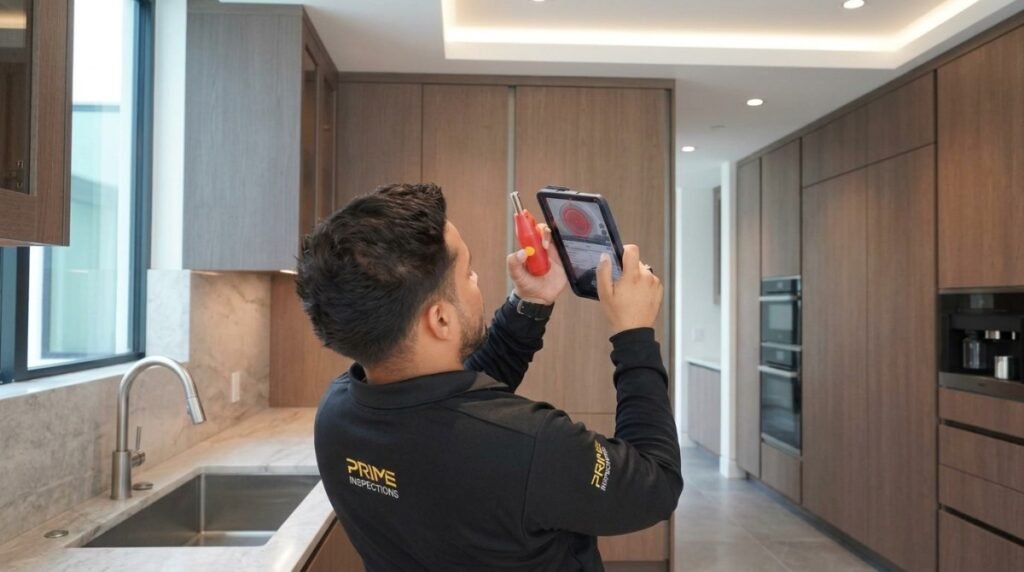
Back in Silicon Oasis, our inspector Farhan ran the thermal camera and moisture meter across the bathroom ceiling. The moisture meter read wet at the edge closest to the flat above and dry in the middle. That pattern does not start in your own pipes.
It pointed to the shower waterproofing in the flat above. With our report, the owner wrote to the upstairs owner and the Management Entity. The upstairs owner’s contractor redid the shower waterproofing. It took about five weeks.
For more on this, read about water leaking from a neighbour’s unit and who pays for a water leak after handover.
Who Pays Depends on the Cause
Defects after the DLP in Dubai are sorted by cause. Here is how responsibility usually falls.
The Who Pays Table
| Cause | Usually responsible | Time limit |
| Structural failure | Developer, contractor or engineer | Ten years; claim within three years of discovery |
| Installation fault after year one | Usually the owner, unless the SPA or a product warranty covers it | Depends on the warranty |
| Leak from the upstairs wet area | The upstairs owner | Act promptly |
| Shared riser, roof, podium or facade | Management Entity through service charges, possibly the developer if structural | Depends on the cause |
| Your own alteration | You | Not applicable |
| Wear and tear | You | Not applicable |
This is general information, not legal advice for your case.
What Really Is Your Cost Now
Some things are simply maintenance once the year is over:
- Paint touch ups
- Sealant renewal around baths, sinks and windows
- AC servicing and filter cleaning
- Grout repairs
- Hairline plaster cracks
- Door and hinge adjustments
Budget for these as normal upkeep. Being clear about what is yours makes it easier to push back on what is not.
What to Do First, in This Order
Before you pay anyone, follow these steps:
- Do not repair yet, unless there is a safety risk or active water damage. If there is, make it safe and photograph everything first
- Photograph and video the defect with dates
- Write down the date you discovered it. For structural claims, that date starts the three year clock
- Find your completion certificate date and your handover date
- Get an instrument based diagnosis of the cause
- Write to the right party, with the report attached
- Keep every reply
- Speak to a UAE qualified lawyer before spending money on recovery
On forums: disputes under Law No. 6 of 2019 go to the RDSC under Article 42, and claims against a developer or contractor often go through the Dubai Courts. The right forum depends on the claim, and a lawyer confirms it. This is general information, not legal advice for your case.
Before you pay a repairer, find out who should. Our water leak and defect diagnosis reports arrive within 24 hours.
How to Show the Defect Is Not Wear and Tear
The stronger your evidence, the easier any claim becomes. Useful evidence includes:
- Your handover snag report and photos
- A DLP inspection report, if you had one
- Thermal and moisture readings
- Tenant complaints with dates
- Management Entity maintenance logs
Every piece that shows when the problem started helps.
Practical Example: Two Defects, Two Different Answers
Take a villa owner in year three with two problems.
Defect A: a balcony slab with water ponding and rust staining at the edge. This needs a diagnosis. It could be a waterproofing issue, or it could point to corrosion in the slab. If the engineer finds it is structural, Route 1 applies, and the developer or contractor may still be responsible. If it is a waterproofing or drainage issue only, the answer may be different.
Defect B: a failed water heater. This is an installation item, and the one year window has passed. It is usually the owner’s cost, unless a product warranty from the manufacturer still applies.
Same villa, same year, two different answers. The cause sorted them, not the calendar.
Not sure which column your defect falls in? An engineer can usually tell on the first visit.
What We Do When the Window Has Closed
Back in Silicon Oasis, the corridor crack was the other half of the story.
It followed a line where blockwork met a concrete column. It was a plaster joint crack, with no displacement and no sign of movement. Not structural.
The crack was his to fix. We said so in the first ten minutes, and it made the rest of the report easier for everyone to accept. The repair was a few hundred dirhams of filling and paint. And because we had been straight about the crack, the neighbour took the damp finding seriously.
Our method is the same on every job. Thermal imaging, moisture meters, a borescope where access allows, and electrical testing. The report arrives within 24 hours and names the likely cause and the evidence behind it.
A water leakage inspection starts from AED 799 for an apartment survey and from AED 1,999 for a villa or townhouse, excluding VAT. For Owners Committees with a building wide issue, a complete building inspection starts from AED 4,999, with the scope and fee confirmed in writing before the visit.
If it is yours, we will tell you. We do not do repairs, so we gain nothing either way. Our team are engineers, not technicians.
Still Inside Year One? Do Not Let It Get Here
If your handover was less than a year ago, you can avoid this situation entirely.
A DLP inspection is a full inspection in the last weeks of the one year window. We use thermal imaging to find moisture ingress, wiring faults and poor workmanship while the developer is still responsible. The fee is quoted on unit size.
For a step by step plan, read what to do before your DLP ends.
Frequently Asked Questions
Can I claim defects after the DLP expires in Dubai?
Sometimes, yes. The one year cover for installations ends, but structural defects stay covered for ten years from the completion certificate. Leaks from another unit or common parts may belong to someone else. The cause decides whether you have a claim.
Who pays for repairs after the defects liability period?
It depends on the cause. Structural failures can still be the developer’s, contractor’s or engineer’s. Leaks from upstairs belong to that owner, and shared services go to the Management Entity. Ordinary installation faults and wear and tear are usually the owner’s cost.
Is the developer still liable for structural defects after one year?
Yes. Under Article 40(a) of Dubai Law No. 6 of 2019, structural defects are covered for ten years from the completion certificate. Federal decennial liability also applies, and a claim must be brought within three years of discovering the defect.
Does the ten year warranty cover water leaks?
Usually no. Leaks are typically installation or waterproofing items, which sit in the one year window. The ten year cover applies only if the leak results from a structural defect. A diagnosis of the cause is the first step.
What is a latent defect, and how long do I have to claim?
A latent defect is a hidden fault that could not reasonably be found at handover. Under Federal Decree-Law No. 25 of 2025, claims are generally not heard after one year from the day following delivery, unless longer was agreed. Speak to a lawyer.
The leak is coming from the flat above. Who pays?
Usually the owner of the flat above, if the leak comes from their wet areas, such as failed shower waterproofing. If it comes from a shared pipe serving more than one unit, it is a common part and goes to the Management Entity.
Should I repair the defect before getting it inspected?
Not if you can avoid it. Repairing first can destroy the evidence of the cause. If there is a safety risk or active water damage, make it safe and photograph everything first, then get a diagnosis before any full repair.
How do I prove a defect started before the DLP ended?
Use dated evidence: your handover snag report, any DLP inspection report, thermal and moisture readings, tenant complaints with dates and Management Entity logs. Write down the date you discovered the defect, and keep every message you send or receive.
Before You Pay for the Repair, Find Out What Caused It
Finding snags after the DLP expires does not always mean the bill is yours. The cause decides.
Our engineering manager, Eng. Mohammed Nadeem Maldar, has a simple piece of advice: find the cause before you pay for the cure. As he puts it: “Buying a home in the UAE is one of the biggest investments a family or an investor will ever make.”
WhatsApp +971 50 602 1830 or email connect@primeinspections.ae. Apartment leak survey from AED 799, excluding VAT. Your report arrives within 24 hours, and we hold a 4.9 star Google rating.