What to Do When Damp Appears on a Ceiling in Your Apartment

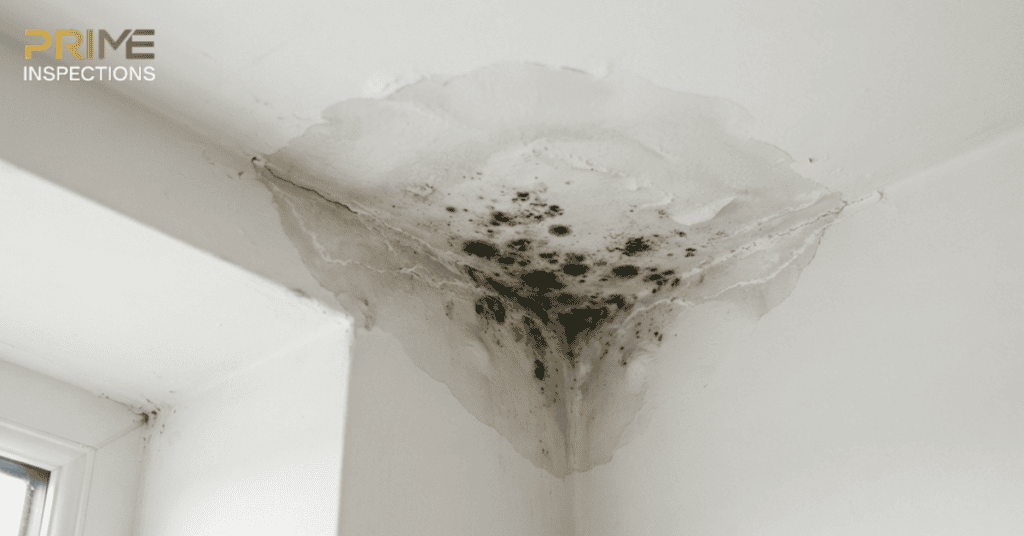
First it was faint. A slight shadow you were not sure was even there. Then it became a ring. Then a ring inside a ring, with a soft brown edge.
So you painted it.
A few weeks later it came back, in exactly the same place, slightly bigger. By now you have quietly decided it must be the neighbour upstairs, and you have not yet worked out how to raise it without it becoming awkward.
Stop there for a moment.
At Prime Inspections, we are called to damp ceilings more than almost any other single defect. And in a large share of them, the neighbour upstairs is completely innocent. There is also a very good chance the reason your paint failed is simple. You were painting a symptom.
What Causes a Damp Patch on a Ceiling in a Dubai Apartment?
In Dubai the two most common causes are inside your own ceiling void, not in the flat above. A fan coil unit’s condensate drain can overflow or block, and an uninsulated chilled water pipe will sweat continuously in Dubai’s humidity. Failed waterproofing in the unit above is the third cause, not the first. Only a proper diagnosis tells them apart.
That single fact surprises most people, because everybody blames upstairs first. In a Dubai apartment, the answer is very often sitting in the ceiling directly above your head, and it has nothing to do with anyone else.
Why Painting Over It Never Works
Let us answer the real question first, because it is the one that brought you here. Why did the paint not fix it?
Paint Is a Finish, Not a Repair
Paint changes how a surface looks. It does nothing to what is happening behind it.
Covering a damp patch with paint is like putting a plaster over a tap that is still running. The plaster is not the problem, and it is not the solution either.
It Does Not Dry the Substrate, and It Does Not Stop the Water
The plaster or board behind the stain is still wet. The source that wet it is still active.
A coat of paint seals the surface for a while, then the moisture pushes back through and the stain reappears.
It Comes Back in the Same Place for a Reason
Water follows the path of least resistance, and that path does not change when you paint over the exit point.
So the patch returns exactly where it was, because the water is still arriving at exactly the same spot. The location is a clue, not a coincidence.
And Every Coat Erases Your Evidence
Here is the part almost nobody thinks about.
If the cause turns out to be a construction defect, and you are still inside your defects liability period, then every time you paint over it you are erasing the evidence of your own claim. You are quietly making it harder to prove the thing that would have made this the developer’s problem instead of yours.
What Is Actually Above Your Ceiling, and Why Dubai Is Different
Most damp advice online is written for houses in cold, wet countries. Rising damp, penetrating brick walls, leaking pitched roofs.
None of that describes an apartment on the eleventh floor in Dubai. To understand your ceiling, you have to know what is inside it.
The Ceiling Void in a Typical Dubai Apartment
Above your plasterboard or plastered soffit, there is usually a void. And that void is surprisingly busy.
The fan coil unit (FCU)
Your air conditioning fan coil unit often sits inside the ceiling void. Every hour it runs, it pulls moisture out of the air and produces condensate. In a Dubai summer, that is a lot of water, every day.
The condensate drain pan and drain line
That condensate is caught in a drain pan and carried away by a drain line. This is the single most common failure point in a Dubai ceiling.
Block that line with dust or a kink, or let the pan crack or tilt, and the water it was carrying goes onto your ceiling instead.
The chilled water flow and return lines
If your building runs on district cooling from Empower, Emicool or Tabreed, cold chilled water lines run through the ceiling. They are genuinely cold, and they must be properly insulated.
Domestic water and drainage pipework
Supply and waste pipes serving your unit or the unit above can also run through the void. These are the classic leak sources, and they are real, but in Dubai they are not the most common cause.
The slab above, and whatever sits on top of it
Finally there is the structural slab, and above that either another apartment, a podium, or a roof. This matters most for top floor and podium level units.
Why Dubai’s Dew Point Changes Everything
This is the piece that no imported damp advice understands.
In a Dubai summer, the air inside a ceiling void can be humid enough that any cold surface will pull water straight out of it. That is condensation, and it is relentless.
An uninsulated chilled water pipe does not leak. It harvests water out of the air, continuously, all summer long. That water collects, drips, and lands on your ceiling. There is no burst pipe to find, because nothing burst.
This is why a damp patch that appears in July and fades in January is almost never a plumbing leak.
The seasonal tell
If the patch is worse in summer and better in winter, you are probably looking at condensation, and the cause is almost certainly insulation or the FCU.
If it is not seasonal but tracks the weather and the rain, look at the facade or the roof.
If it is constant, regardless of season or weather, look at plumbing or waterproofing.
That three line test will not diagnose everything, but it will tell you which direction to look. Most people have never been told to check the season.
The Six Causes, Ranked by How Often They Are Actually the Answer
Here they are in the order we actually find them in Dubai apartments, with the tell that points to each one.
| Cause | The tell | Usually whose problem |
| 1. FCU condensate drain overflow or blockage | Patch near an AC access panel or supply grille. Worse in summer, worse when the AC runs hard. | Developer, if an installation defect within the window. Otherwise maintenance. |
| 2. Chilled water pipe condensation, missing or damaged insulation | Patch runs in a line, not a circle. Strongly seasonal. Nothing above it explains it. | Developer. A specification and workmanship failure, not a leak. |
| 3. Failed wet-area waterproofing in the unit above | Patch directly under their bathroom or kitchen. Not seasonal. Worse when they shower. | Developer within the window, otherwise the upstairs owner. |
| 4. Pipework failure in the ceiling void or a riser | Sudden, growing, not seasonal. | Owners Association, if it is in a common riser. |
| 5. Roof or podium waterproofing | Top floor or podium level only. Follows rain. | Owners Association, or developer if structural. |
| 6. Slab or structural waterproofing failure | Rare. Widespread. Often with other symptoms. | Potentially decennial, up to ten years. |
Notice the pattern. The top two causes, the ones we find most often, are inside your own ceiling and have nothing to do with the neighbour. We wrote a full guide to water leaks and who is responsible that lays out the complete liability picture across every source.
Is It Mould, and Is It Dangerous?
This is the worry sitting underneath the frustration, especially for anyone with young children in the home. Here is the honest answer.
What Mould Needs to Grow
Mould needs moisture and time. Damp materials that are not dried out within roughly 24 to 48 hours are where it starts.
A ceiling that has been quietly wet for weeks or months has given it everything it needs.
Why Dubai’s Humidity Speeds It Up
High ambient humidity means damp materials dry more slowly and mould establishes more easily. A persistent damp patch here is a more reliable mould source than the same patch in a dry climate.
The Health Considerations, Stated Plainly
Prolonged exposure to mould can affect breathing and can be harder on people with asthma, allergies or weaker immune systems.
We are inspectors, not doctors, so we will not overstate this. If anyone in your home has a persistent cough, worsening allergies or breathing trouble, speak to a doctor. That is not our area, and we will not pretend it is.
The Point Everyone Misses
You cannot remediate mould while the source is still active.
Cleaning the mould off without stopping the water is the exact same mistake as painting the patch. It will come back, in the same place, for the same reason. Kill the water first. The mould follows the water, not the other way round.
When to Act Immediately
If the growth is extensive, if the damp is spreading quickly, or if someone in the household has respiratory symptoms, do not wait to see what happens. Get the source found and stopped now.
Who Is Responsible for a Damp Ceiling in a Dubai Apartment?
The rule is short. Where the water originates decides who pays.
If it starts in your own ceiling void, the FCU and its drain, the responsibility depends on whether it is an installation defect inside your one year window or a later maintenance issue. If it starts in the flat above, it points to that owner or, within the window, the developer. If it starts in a common riser or the roof, it points to the Owners Association.
Overlay the two clocks on top of that. The developer carries one year of liability for installations from handover, and ten years for structural elements. Our guide to water leaks and liability has the full matrix, and our guide to the defect liability period explains exactly how the clocks work.
How to Find the Source Without Opening the Ceiling
This is the fear that stops people acting. They assume finding the cause means demolishing the ceiling. It usually does not.
Thermal Imaging
A thermal camera reads temperature across the ceiling surface. A cold plume where a chilled line sweats, or a cool spreading patch where water is tracking, shows up clearly without touching anything.
Moisture Readings Against a Dry Reference
A moisture meter compares the damp area to a known dry part of the same ceiling. It turns “that looks wet” into an actual measured difference.
Humidity and Dew Point Measurement
This is the test that separates condensation from a leak, and almost nobody runs it. If the conditions in the void favour condensation, the cause is very different from a burst pipe, and the fix is different too.
Tracer Testing
Where a specific fixture or the unit above is suspected, controlled tracer testing can isolate the source rather than guessing at it.
Borescope Inspection
A borescope looks into the void through a single hole the size of a coin. One small, repairable opening in the right place, instead of a metre of ceiling cut out in the wrong one.
The Alternative, Stated Plainly
The other option is a contractor with a saw, opening your ceiling to look inside. Sometimes in the wrong place. Then patching it, and opening it again somewhere else. Non-destructive diagnosis exists precisely so that when something is opened, it is opened once and in the right spot.
What to Do Before You Paint It Again
If you take nothing else from this article, take this sequence.
- Photograph it. Dated, with something in frame for scale. Build a record from today.
- Note whether it is seasonal. When did it start, and when is it worst? Summer or winter? This is your most valuable single clue.
- Do not paint it, do not seal it, do not clean the mould off yet. Every one of those erases evidence you may need.
- Check what is above it. A bathroom, a kitchen, an AC access panel, a supply grille, or nothing obvious. The location narrows the cause.
- Notify your building management or Owners Association in writing. Create a dated record, not a phone call nobody remembers.
- Notify the developer in writing if you are still inside your defects liability period. This protects your position.
- Get a diagnosis with instruments before anyone opens anything. Find the source first.
- Then, and only then, fix the source. And after the source is fixed, repair the ceiling. In that order, every time.
The Damp Patch That Had Nothing to Do With the Neighbour
Here is a pattern we see often enough that it is worth telling honestly.
An owner had painted the same patch on their living room ceiling three times across two summers. It kept coming back in the same spot each time, always in the warmer months.
By the time we were called, they had more or less stopped saying good morning to the family upstairs. They were certain it was that bathroom, and they were bracing for an argument.
The thermal scan told a different story.
There was a cold line running diagonally across the ceiling void, nowhere near the bathroom above. Following it, the insulation on a chilled water pipe had been lapped short at a fitting, leaving a few centimetres of bare cold pipe exposed.
That bare section had been sweating every single day of every Dubai summer since the building was handed over. No leak. No burst. No neighbour. Just a gap in the insulation that the summer humidity found, year after year.
The ceiling had been telling them the answer the whole time, because it only ever happened in summer. Nobody had thought to ask it the right question.
Frequently Asked Questions
What causes a damp patch on a ceiling in a Dubai apartment? In Dubai the most common causes sit inside your own ceiling void: a blocked or overflowing fan coil unit condensate drain, and an uninsulated chilled water pipe sweating in the summer humidity. Failed waterproofing in the unit above is the third cause. Pipework, roof and slab issues follow. A diagnosis tells them apart.
Why does my ceiling damp keep coming back after painting? Because paint is a finish, not a repair. It does not dry the material behind the stain, and it does not stop the water arriving. If the source is still active, the moisture pushes back through and the patch returns in the same place. Painting also erases evidence you may need for a defect claim.
Is a damp ceiling always caused by the flat above? No, and in a Dubai apartment it very often is not. The two most common causes, a fan coil unit drain and a sweating chilled water pipe, are inside your own ceiling void and have nothing to do with the neighbour. Blaming upstairs first is a mistake that starts unnecessary disputes.
Can an air conditioning unit cause a damp ceiling? Yes, and in Dubai it is the single most common cause. A fan coil unit in the ceiling produces condensate every hour it runs. If the drain pan cracks or the drain line blocks, that water goes onto your ceiling. Patches near an AC access panel that worsen in summer point straight to this.
Is condensation from a chilled water pipe a defect the developer must fix? Often, yes. A chilled water pipe sweating because its insulation is missing or damaged is a specification and workmanship failure, not a leak and not normal wear. That makes it a snag. If it is identified within your defects liability period, it can fall to the developer to rectify at no cost to you.
Is black mould on a ceiling dangerous? Prolonged mould exposure can affect breathing and is harder on people with asthma, allergies or weaker immune systems. We are inspectors, not doctors, so if anyone at home has a persistent cough or breathing trouble, see a doctor. Critically, you cannot clear mould for good while the water source is still active.
Who is responsible for a damp ceiling in a Dubai apartment? Where the water originates decides who pays. Your own ceiling void points to you or, within the window, the developer. The flat above points to that owner or the developer. A common riser or roof points to the Owners Association. The developer also carries one year on installations and ten years on structure.
How do you find the source of ceiling damp without opening the ceiling? Non-destructive tools do most of the work: thermal imaging to see cold plumes and tracking water, moisture readings against a dry reference, humidity and dew point measurement to separate condensation from a leak, and a borescope that needs only a coin-sized hole. The ceiling is opened once, in the right place, not cut apart to search.
Find Out What It Is Before You Paint It Again
A damp patch is not a decorating problem. It is a message from somewhere you cannot see, and painting over it just silences the messenger for a few weeks.
Our Water Leakage Inspection finds the source using thermal imaging and moisture detection, without cutting your ceiling open to go looking. You get the actual cause, the likely responsible party, and a record you can act on.
Prime Inspections is a RERA approved, DLD and DED registered snagging company with InterNACHI certified engineers, serving Dubai, Abu Dhabi, Sharjah, Ajman, Fujairah, Ras Al Khaimah and Umm Al Quwain. Reports are delivered within 24 hours.
Book your water leakage inspection
- Call: +971 50 602 1830
- WhatsApp: Chat with our inspection team
- Email: connect@primeinspections.ae
- Office: The Binary by Omniyat, Business Bay, Dubai
- Website: www.primeinspections.ae
You can see what other Dubai owners say about the process on our Google Business Profile, or learn more about our team and how we work.