What to Do When a Developer Ignores Your Snag List Dubai

There is a specific point in a stalled snag list where owners call us, and it is almost never right after a refusal. It is after the third unanswered follow up.
You sent the list. Maybe you got a short acknowledgement, maybe you did not. Two weeks passed. You followed up. Someone told you it had “been passed to the contractor.” Three more weeks passed. Nobody has said no to you. Nobody has argued with a single item on your report. You are simply not being answered anymore.
That is the specific, uncomfortable feeling this article is written for. You are not being refused. You are being outlasted.
We have sat on the other side of this exact silence with clients across Dubai, Abu Dhabi, and the Northern Emirates, and there is a real ladder you can climb from here. Some rungs of that ladder work exactly the way people think they do. Some do not work the way people assume, and pretending otherwise would waste your time and your money. This article gives you both, honestly, in order.
How Long Does a Developer Actually Have to Fix Snags in Dubai?
There is no single statutory deadline for individual snag repairs in Dubai. What is fixed is the liability window. Under Dubai Law No. 6 of 2019, the developer is liable for installation defects for one year from handover, and for structural defects for ten years from the completion certificate. Within that window, actual repair timeframes come from your Sale and Purchase Agreement and from whatever schedule you agree with the developer in writing.
In other words, the law tells you how long the developer is on the hook. It does not tell you how many days they have to send a plumber. That second part is judged by what is reasonable for the defect in question, and reasonable looks very different for a scuffed skirting board than it does for a leaking wet wall.
Realistic Rectification Timeframes by Defect Type
We rely on this table with clients constantly, because it turns a vague sense of “this is taking too long” into something you can actually point to in an email.
| Defect Type | Typical Rectification Time | When It Has Become a Delay |
| Cosmetic (paint, minor finishing) | 1 to 2 weeks | Past 4 weeks with no schedule given |
| Functional (MEP, fittings, tiling) | 2 to 4 weeks | Past 6 weeks with no schedule given |
| Major or structural (waterproofing, slab, façade) | 4 weeks or more, and genuine curing or testing time is legitimate | Past 8 weeks with no named contractor and no schedule |
A word of caution on that last row. Waterproofing and structural work often does need real curing time, and a developer who tells you a slab repair needs three weeks to cure properly is not stalling you, they are doing the job correctly. The red flag is not a long timeline. It is the absence of any timeline at all.
Why “It Has Been Passed to the Contractor” Is Not a Schedule
We hear this phrase from clients almost weekly, always delivered as though it settles the matter. It does not. “Passed to the contractor” tells you nothing about who is responsible, what date they were given, or what happens if that date passes. It is a status update, not a commitment.
The one thing that needs to exist before you escalate anything is a written, dated request that names the defect, references your report, and states a deadline. Without that, you have nothing to point to later, and everything that follows in this article depends on having it.
The Dubai Escalation Ladder, and What Each Rung Can Actually Do
This is the part most articles on this topic get wrong, and it is worth saying plainly: everyone tells frustrated owners to “escalate to RERA,” as if it were a single button that fixes a bathroom. It is not, and we would rather tell you that now than have you find it out after weeks of waiting on the wrong forum.
The Dubai Lhttps://dubailand.gov.ae/en/and Department’s own guidance is explicit that contractual disputes, applications to revoke a contract, refunds of amounts already paid, and indemnity claims are not handled through the real estate violation complaint channel. DLD states these fall outside that channel’s jurisdiction and must go to the judicial bodies instead. That single fact changes how you should think about every step below.
| Rung | Channel | What It Can Actually Do | What It Cannot Do | Cost |
| 1 | Developer customer care, in writing only | Resolves most snags. Builds the paper trail everything else depends on | Nothing, if you only ever call and never write | Free |
| 2 | Formal written notice with a deadline and your report attached | Puts the developer formally on notice. Shows good faith to any later forum | Compel a repair by itself | Free |
| 3 | DLD / RERA Real Estate Violation Complaint, filed through the Dubai REST app or the DLD website, with a reference number issued. RERA: 800 4488 within the UAE, +971 4 203 0555 internationally | Logs a regulatory violation, triggers review and mediation, applies genuine regulatory and reputational pressure | Award you compensation, order a refund, or force a specific repair. DLD states these matters fall outside this channel’s jurisdiction | Free |
| 4 | Legal notice through a UAE qualified lawyer | Escalates the matter seriously. Often the point where a stalled file suddenly starts moving | Guarantee any particular outcome | Paid |
| 5 | Dubai Courts, property circuits | Binding judgment, enforceable damages, and usually a court appointed technical expert whose findings tend to be decisive | Move quickly or cheaply | Paid |
| 6 | Rental Disputes Centre | Nothing relevant here. This is the wrong forum entirely | Handle owner versus developer matters at all, since it is for landlord and tenant disputes | n/a |
What to File With a DLD or RERA Complaint
If you go this route, have the following ready before you start: your Emirates ID or passport, the SPA, your Oqood or title deed, proof of payments made, every piece of written correspondence with the developer, and your dated defect report with photographs attached.
What Actually Happens After You File
A reference number is issued, the complaint enters review, and in many cases the developer is contacted and a mediation conversation opens. This genuinely does apply pressure. Developers do not enjoy having a regulatory reference number attached to their file, and it is not unusual for a stalled response to suddenly appear once one exists.
Here is the honest part, though, and it matters more than anything else on this page. A RERA complaint will not force the developer to carry out a specific repair, and it will not award you money. It creates pressure and a paper trail. It does not create a court order. If what you actually need is compensation, a refund, or a binding instruction to fix something, that route runs through the judicial bodies, not through the violation complaint channel. Knowing this before you file saves you weeks of waiting for an outcome the system was never designed to give you at that stage.

The Leverage Nobody Tells You About: The 5 Percent Escrow Retention
This is the part of the Dubai system that almost never gets mentioned in snagging advice, and it is worth understanding properly, because it changes how you write to a developer.
Under Article 14 of Dubai Law No. 8 of 2007, once a developer obtains the completion certificate, the escrow agent is required to retain 5 percent of the total value of that project’s escrow account. That retained amount is only released to the developer one year after the units have been registered in the names of the purchasers.
DLD’s own guidance describes the purpose of this retention plainly: it exists as a guarantee that the developer, or their contractor, addresses defects promptly and effectively, whether those defects were apparent at completion or appear within the year following handover.
What this means in practice is worth sitting with for a moment. The developer is not doing you a personal favour by attending to your snag list. A slice of the project’s own money is sitting in a bank account under DLD’s rules, held back specifically for this purpose, and it does not get released until a year after your unit was registered in your name. A buyer who understands this negotiates from a completely different position, and, frankly, writes a very different kind of follow up email.
Why Your Snag List Might Be Easy to Ignore
We are going to say something here that not every owner wants to hear, but it is the thing that actually changes outcomes. In our experience, the problem is often not that the developer is deliberately ignoring you. It is that what you sent them is easy to set aside.
Picture what a developer’s technical team sees when a buyer’s email arrives. A general complaint, a handful of phone photos taken at different times of day, no reference numbers, no severity ranking, no link back to the original specification in the SPA. To an internal team juggling dozens of units, that email reads as low priority, because nothing about it forces a response.
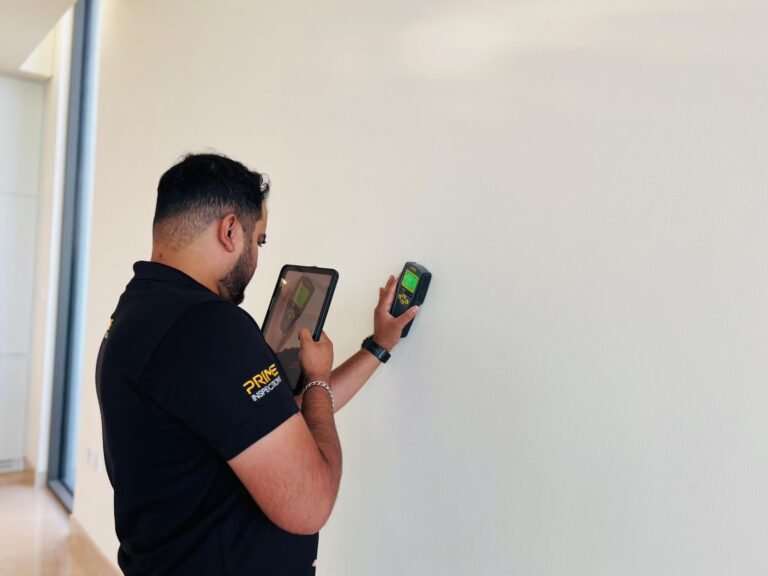
Compare that to a report where every item is numbered and located, every photo is dated, moisture and other instrument readings replace vague adjectives like “damp” or “uneven,” each item carries a severity classification so nothing can be quietly lumped in with cosmetic issues, and each defect is tied back to the specification the developer themselves signed off on in your SPA. That report is produced by an independent, credentialed third party with no commercial relationship to the developer at all, which is exactly why it is harder to dismiss.
Here is the connection most owners never make, and it is the single most important idea in this article. If this dispute ever reaches a court, the court will almost always appoint an independent technical expert, and that expert’s report tends to be decisive in how the case is resolved. Whatever you documented properly today is what that expert will see. Whatever you never documented simply does not exist as far as that process is concerned. The quality of your paperwork now is quietly deciding the outcome of a dispute you have not even filed yet.
Can You Just Fix It Yourself and Bill the Developer?
Almost every frustrated owner considers this at some point, and almost nobody explains the real risk properly.
Why Self Repair Can Destroy the Evidence and the Claim
The moment you patch a leak, repaint a wall, or replace a fitting yourself, you have altered or removed the physical evidence of the original defect. If the matter later goes to escalation or to court, there is nothing left for an inspector or an expert to examine. Your right to recover that repair cost from the developer is also not automatic just because you paid for it yourself. You can end up out of pocket twice, once for the repair and once for the argument you can no longer prove.
The Narrow Cases Where It May Be Reasonable
There are situations where waiting genuinely is not sensible, such as urgent water damage that is actively spreading, or a safety issue that puts someone at risk. Even then, photograph and document the defect exhaustively from every angle before you touch anything, and keep every receipt.
Take Advice Before You Spend Money You Intend to Recover
If cost recovery matters to you, speak to someone before you act, not after. Once the evidence is gone, it is gone.
What Actually Moves a Stalled File
One file we worked on had gone quiet for close to two months. The owner had sent emails. Nobody was rude, nobody said no, the developer’s team simply stopped replying in any meaningful way. What changed the outcome was not anger, and it was not a lawyer’s letter. It was a re-inspection report with twelve outstanding items, each one numbered against the original snag list, each with a before and after photo pair and, on two of them, a moisture reading that had not improved at all. The covering email was one line long, dated, and attached the report.
Within a week, the file was moving again. The lesson we take from cases like this is simple: developers do not respond to frustration, however justified it is. They respond to documents that would be uncomfortable to explain in front of a third party.
Frequently Asked Questions
How long does a developer have to fix snags in Dubai? There is no single fixed deadline for individual repairs. Dubai Law No. 6 of 2019 sets the liability period at one year for installation defects and ten years for structural defects from handover or completion. Actual repair timing within that window is governed by your SPA and any written schedule you agree with the developer.
Can I complain to RERA about a developer not fixing defects? Yes, you can file a real estate violation complaint with DLD or RERA. This creates a reference number, triggers review, and applies real pressure. It does not, however, force a specific repair or award compensation, since DLD states contractual disputes and refund claims fall outside that channel’s jurisdiction.
How do I file a complaint against a developer in Dubai? Complaints can be filed through the Dubai REST app or the DLD website, or by phone through RERA at 800 4488 within the UAE. Have your ID, SPA, Oqood or title deed, proof of payment, and your written correspondence and defect report ready.
What can a RERA complaint actually achieve? It logs a regulatory violation against the developer, opens a review and often a mediation step, and adds genuine reputational pressure. It cannot award you money, order a refund, or compel a specific repair, since those matters fall under the judicial bodies rather than the violation complaint process.
Do I need a lawyer to make a developer fix defects? Not always. Many cases move once a properly documented file and a formal written notice are in place. A lawyer becomes more relevant when compensation, a refund, or a binding order is what you actually need.
Can I fix the defects myself and charge the developer? You can, but doing so before documenting the defect thoroughly can weaken or destroy your claim, and cost recovery is not automatic. It is only advisable in urgent situations, and even then, document everything first.
Does a snagging report help in a dispute with a developer? Yes, considerably. A numbered, photo dated, instrument backed report produced by an independent inspector is far harder for a developer’s technical team, a regulator, or a court appointed expert to dismiss than an informal list of complaints.
What happens if the developer never fixes the snags at all? Within the liability period, you retain the right to escalate through a written notice, a DLD or RERA complaint, a legal notice, and ultimately the courts, where a technical expert will typically be appointed to assess the defects. The strength of your documentation at every earlier stage shapes what that expert finds.
Build the File That Cannot Be Ignored
If your snag list has gone quiet, the most useful thing you can do next is not another follow up email. It is a re-inspection that turns your original list into a numbered, dated, photo backed report the developer’s team, a regulator, or a court appointed expert will actually take seriously.
Our new handover snagging service is where most of these files start, and if you have already had one round of snagging done and want to confirm what has actually been fixed, our guide on whether you can re-inspect after the developer fixes your snags walks through exactly how that works. Every report from Prime Inspections is produced by InterNACHI-certified, RERA-approved engineers, delivered within 24 hours, and built specifically to hold up if your file ever needs to move past a stalled email thread. You can read more about who carries out these inspections on our About Us page, or book an inspection directly to get started.