How Much Does a Complete Building Inspection Cost (AED)
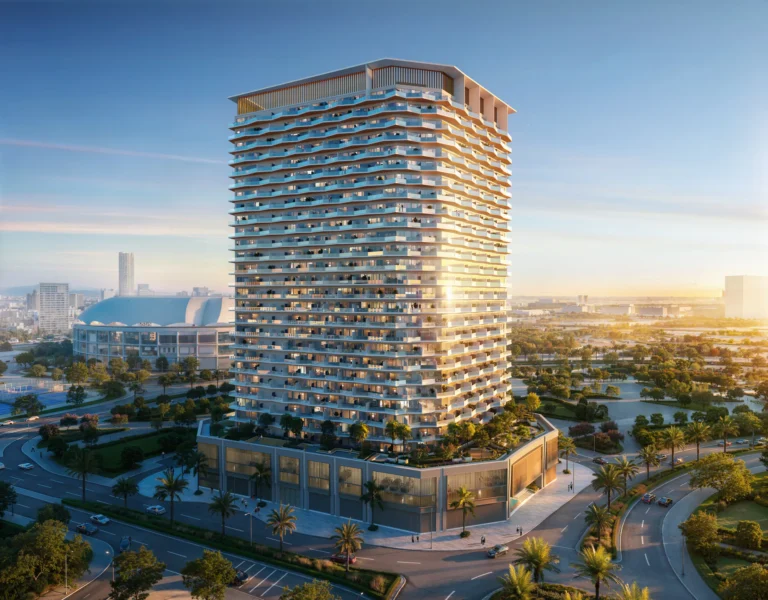
A committee asked us to walk the common areas of a mid rise residential tower before their budget meeting. We started in the basement pump room and finished on the roof. From the street the facade looked fine. From the roof parapet, several sealant joints on one elevation had clearly failed, and water had been tracking down into the top floor corridor for at least one summer. Nobody had asked for a facade scope. The corridor ceiling had been repainted twice.
There is no published rate card for complete building inspection cost in Dubai, so the honest answer is a range. Third party estimates run from AED 15,000 to AED 200,000, and a mid rise tower condition survey is realistically a five figure engagement priced against a defined scope. This page explains what moves that number and how to read three proposals against each other.
What a Complete Building Inspection Costs in Dubai (AED)
No UAE inspection provider publishes a rate card for whole building inspection. Published third party estimates put it at AED 15,000 to 200,000, with a 20 to 40 floor residential tower estimated at AED 80,000 to 200,000. In practice a mid rise Dubai tower condition survey is a five figure engagement priced against scope.
The published estimates
The only source publishing AED figures for this work is Real Estate Club Dubai, an editorial publisher rather than an inspection firm. Their figures are worth having, read as one publisher’s estimate.
| Item | AED, Real Estate Club Dubai estimate |
| Inspection fees, overall range | 15,000 to 200,000 |
| Residential tower, 20 to 40 floors | 80,000 to 200,000 |
| Smaller buildings | 15,000 to 50,000 |
| Re inspection | 15,000 to 50,000 |
| Remediation, fire safety | 200,000 to 1,000,000 or more |
| Remediation, cladding replacement | 500,000 to 5,000,000 or more |
The same publisher advises a 20 to 40 percent contingency on top of the inspection cost and suggests certified buildings may see 10 to 25 percent lower insurance premiums. Both are that publisher’s position rather than established market fact.
What a mid rise tower realistically costs
Reading those estimates alongside adjacent rates that are published, our synthesis, and we call it a synthesis rather than a rate card, is that a mid rise Dubai residential tower building condition survey lands most commonly between AED 25,000 and AED 120,000. Floors, unit count, disciplines and facade access method decide where in that band a building sits. Forty storey towers and full certification packages run above it.
Three published rates help triangulate it. Al Warqa Survey publishes drone survey rates of AED 4,000 to 7,000 for a plot up to one hectare and AED 8,000 to 18,000 for a one to ten hectare site, with airspace restrictions near DXB and DWC adding 15 to 25 percent and rush mobilisation 20 to 40 percent. Expert Property Snagging prices thermal imaging from AED 400 at unit level, which scales by facade area and plant room count. The HomeItBetter benchmark puts unit level MEP assessment at AED 2,099 to 4,000 on a 3,000 sqft unit, a workable floor for a per unit MEP line.
Why no provider publishes a rate card
EIWAA Consultancy, Land Sterling, Knight Frank, Cavendish Maxwell, The Snag Master and TerraMetrix all publish capability pages and none publishes a price. New Nordic comes closest, offering a fixed price scope within 48 hours of a scoping call and a three to four week timeline, without a published rate.
The reason is not evasiveness. Two towers of identical height can differ by a factor of three depending on age, plant, facade type and how much of the building is opened. A number published without a scope would mislead, which is why a committee should ask for scope and fee together, never fee alone.
How Whole Building Inspection Is Priced, and Which Deliverable You Are Buying
Most building proposals arrive as one number, which is exactly why they are hard to compare.
There are five pricing models in this market. Knowing which one a proposal uses tells you what it is hiding.
| Model | Who uses it | What it hides |
| Per building scope proposal after a site visit | EIWAA, Land Sterling, Knight Frank, Cavendish Maxwell, The Snag Master | Sampling percentage and which disciplines are in |
| Fixed price after a scoping call | New Nordic, within 48 hours | What triggers a variation later |
| Per sqft of gross floor area | Referenced generally, published for buildings by nobody we found | Whether common areas and plant count in the area |
| Per unit plus common areas | Firms extending unit rate cards to towers | How many units are actually opened |
| Per day or man day | Standard for RICS style technical due diligence | How many days the firm intends to spend |
| Per discipline line items | Land Sterling, New Nordic, EIWAA | That facade, NDT and lab work are usually separate |
The per sqft model deserves care. Gross floor area sounds objective until you ask whether the basement, plant rooms, podium and corridors sit inside the measured area. Two firms quoting the same rate can be quoting work that differs by a third.
Condition survey, reserve fund study or certification readiness
These three get confused constantly, and they are not substitutes.
A building condition survey records what is wrong with the asset now, discipline by discipline, with photographic evidence and a prioritised defect schedule.
A reserve fund study forecasts replacement cost and timing for major components so the owners association can fund them without a levy. It is financial forecasting built on a condition baseline, normally revisited every three years.
A certification readiness inspection is scoped against what a licensed engineering office will need when it prepares the technical report behind a Quality and Safety Certificate.
One report cannot serve all three properly. A proposal claiming it does is usually a condition survey wearing two other labels.
The Cost Drivers That Move the Number
The single biggest swing in a building inspection fee is not the number of floors. It is how the inspector reaches the facade.
Floors, unit count and sampling percentage
Nobody opens every unit in a 300 unit tower. Firms sample, and the sampling percentage is the most important number that most proposals do not state. Ten percent and thirty percent are very different pieces of work with very different fees, and both appear under the phrase representative sample.
Common areas, plant rooms and substations
Basement pump rooms, chiller plant, tank rooms, substations, the fire pump set, riser cupboards on every floor, lift motor rooms and the roof plant deck. This is where the hours accumulate quietly.
Building age
Stock from the 1990s and early 2000s in Deira, Bur Dubai, Karama and Al Nahda, and the early freehold towers in JLT, Dubai Marina and Discovery Gardens, takes longer than a five year old asset. Not because it is worse, but because there is more history to read and more previous intervention to identify.
Facade access method
This swings a fee more than anything else. A visual inspection from ground and roof level costs one thing. Rope access on a tall elevation costs another. A building maintenance unit cradle, where one exists, is different again, and drone survey carries its own regulatory overhead, with GCAA and DCAA holding dual authority, a per project NOC required and a default visual line of sight ceiling around 120 metres that many Dubai towers exceed.
That tower with the failed sealant joints is why we raise this first in every scoping call. The failure was invisible from the street and obvious from the parapet. Our Engineering Manager, Mohammed Nadeem Maldar, puts it simply whenever a committee asks whether a walk of the lobbies would be enough. A lobby walk tells you how a building is presented. A roof and facade walk tells you how it is performing.
Thermal imaging, NDT and lab testing
Thermal at building scale is priced by facade area and plant room count, not by the unit. Non destructive testing, meaning rebar scanning, cover meter, half cell potential and core sampling, is normally a separate line, and lab work on cores or water samples is a pass through cost. Lift and fire safety specialists are usually subcontracted lines rather than part of a general survey fee.
Two factors move the number quietly. An occupied building costs more than a vacant one, because access is scheduled around residents. And a building under Trakhees, DDA or DIFC jurisdiction rather than mainland Dubai Municipality carries different submission requirements, which affects reporting effort even when the inspection is identical.

Law No. (3) of 2026, the Quality and Safety Certificate, and What Is Still Unconfirmed
Since March 2026 this has stopped being a discretionary spend for most Dubai buildings.
What the law requires
These facts are drawn from published briefings by Al Tamimi & Company and by Motei, and the law itself sits on the Dubai Legislation Portal.
| Fact | Detail |
| Instrument | Law No. (3) of 2026 Concerning the Quality and Safety of Buildings in the Emirate of Dubai, announced 10 March 2026 |
| Scope | All buildings in Dubai, including private development zones and free zones, DIFC included, built before or after the law |
| Effective date | 60 days after publication in the Official Gazette |
| Compliance window | Within one year of the effective date, extendable by the Chairman of the Executive Council |
| Certificate | Mandatory Quality and Safety Certificate attesting structural and technical soundness |
| Who assesses | A licensed engineering office or consultancy, which issues the technical report |
| Validity | 10 years under 40 years old, 5 years at 40 years and older |
| Older stock | Enhanced periodic maintenance obligations above 20 years |
| Penalties | AED 100 to AED 1,000,000, doubled to up to AED 2,000,000 for a repeat within two years |
| Other enforcement | Permit suspension, Ejari lease certification holds, application processing delays |
| Authority | Dubai Municipality, running the digital building management system, unified database and compliance portal |
Who may issue the certificate
A Dubai Municipality licensed engineering office, following its own technical report. We want to be direct about this because the market is not. Prime Inspections and Snagging does not issue the Quality and Safety Certificate. We carry out a pre certification readiness inspection, establishing the condition of the asset and identifying what would fail an assessment, so the certification route is not started blind. If an inspection company tells a committee it can issue the certificate, ask to see the engineering office licence.
What non compliance costs
The confirmed penalty range is AED 100 to AED 1,000,000, doubling to as much as AED 2,000,000 for a repeat within two years. Beyond fines, the enforcement levers are what a committee feels first, since permit suspensions, holds on Ejari lease certification and delays to application processing all interrupt normal building operation.
Which circulating claims are unverified
Several summaries of this law carry detail the law firm briefings do not support. Treat these four as unconfirmed.
The four phase compliance deadline table sorted by building age. Motei reads the law as applying a uniform one year period to all buildings.
The four level penalty ladder with specific bands. Only the AED 100 to AED 1,000,000 range and the doubling provision are law firm confirmed.
The claim that only buildings over 20 years old need a certificate. Twenty years is the threshold for enhanced maintenance obligations, not for the certificate.
The derived May 2027 deadline, which depends entirely on the Official Gazette publication date.
Budget against the confirmed facts and treat the rest as commentary until Dubai Municipality publishes implementing detail.
How an Owners Association Funds and Approves the Spend
The money question for a committee is not only how much, it is which pot it comes from.
Three routes exist. The service charge budget for the coming year, cleanest when the inspection can be scheduled to the budget cycle. The reserve fund, whose use depends on how the spend is classified, since it exists for major capital components rather than routine professional fees. And a special levy, the slowest route and usually the consequence of not planning the first two.
Whether a condition survey can properly be drawn from the reserve fund is a classification question for the association, its management company and its accountant, not something an inspection firm should rule on. Raise it inside the RERA and Mollak budget approval cycle, not after committing to a scope. Law No. 6 of 2019 on jointly owned property governs the framework the association works within.
On signature, the association or its management company instructs the work for common property, while a single owner of a whole building instructs directly. Settling that before proposals are requested saves a round of revisions.
How to Compare Three Proposals Without Being an Engineer
A proposal that is thirty percent cheaper is usually thirty percent smaller, and the missing part is normally the facade.
That was true of the tower with the failed sealant joints. The committee had three proposals and the cheapest was cheapest for one identifiable reason. Facade inspection was excluded, in one line on the second page. It was not a dishonest proposal. It answered a smaller question than the committee thought it was asking.
Seven items to line up before comparing any two totals:
Disciplines covered. Structural, MEP, facade, fire and life safety, lifts, waterproofing. Which are in, which are named as exclusions.
Sampling percentage. What proportion of units and risers will actually be opened.
Facade access method. Ground and roof visual, rope access, cradle or drone, and who obtains the NOC.
NDT and lab testing. In the fee, quoted separately or excluded entirely.
Deliverable format. A photographic defect schedule, a prioritised remedial plan, cost estimates, or all three.
Submission. Whether the report is stamped and submitted to an authority or issued to the client only.
Re inspection terms. Whether a follow up visit after remedial works is priced now or later.
One more question is worth asking every bidder. Does the firm hold, or hope to hold, the maintenance contract on this building. The firm holding that contract should not be the firm grading the maintenance.
Frequently Asked Questions
How much does a complete building inspection cost in Dubai? No UAE provider publishes a rate card. Third party estimates run AED 15,000 to 200,000, and a mid rise tower condition survey is realistically a five figure engagement priced against a defined scope.
How is a whole building inspection priced? Five models exist. Per building scope proposal, fixed price after a scoping call, per sqft of gross floor area, per unit plus common areas, per day, or per discipline lines.
Is a building inspection mandatory in Dubai? Law No. (3) of 2026 requires a Quality and Safety Certificate for buildings in Dubai, including free zones. The assessment behind it must come from a licensed engineering office.
Who can issue the Quality and Safety Certificate? A Dubai Municipality licensed engineering office, following its technical report. We do not issue it. We carry out pre certification readiness inspections so the certification route is not started blind.
What is the fine for non compliance? Law firm briefings confirm a range of AED 100 to AED 1,000,000, doubling to as much as AED 2,000,000 for a repeat violation within two years, alongside permit and Ejari related enforcement.
Can an owners association pay for it from the reserve fund? It depends how the spend is classified in the approved budget. Raise it inside the RERA and Mollak cycle with the management company and accountant before committing to a scope.
Is a condition survey the same as a reserve fund study? No. A condition survey records what is wrong now. A reserve fund study forecasts replacement cost and timing for major components and is normally revisited every three years. They are not substitutes.
How long does a whole building inspection take? It depends on floors, sampling percentage and access method. New Nordic publishes a three to four week timeline for its certification scope, a fair planning assumption for a mid rise asset.
What does a cheap proposal usually leave out? Most often the facade, then NDT and lab testing, then sampling depth. Compare those three lines before comparing totals, because that is where the difference sits.
Request a Scope and Fee Proposal
Send us six details about the building and we will come back with a scope and a fee against it. Floors, unit count, year of completion, common areas and plant rooms, facade type and height, and whether a Dubai Municipality submission is required.
We are independent of the facilities management contract on the buildings we assess, we carry out no remedial works, and we do not issue the Quality and Safety Certificate. We provide the assessment a committee can budget from and a licensed engineering office can work with.
Request a scope and fee proposal. Call +971 50 602 1830 or email connect@primeinspections.ae. Prime Inspections and Snagging, The Binary by Omniyat, 1914-203, Business Bay, Dubai.