Can You Snag a Dubai Property Before You Pay the Final Instalment
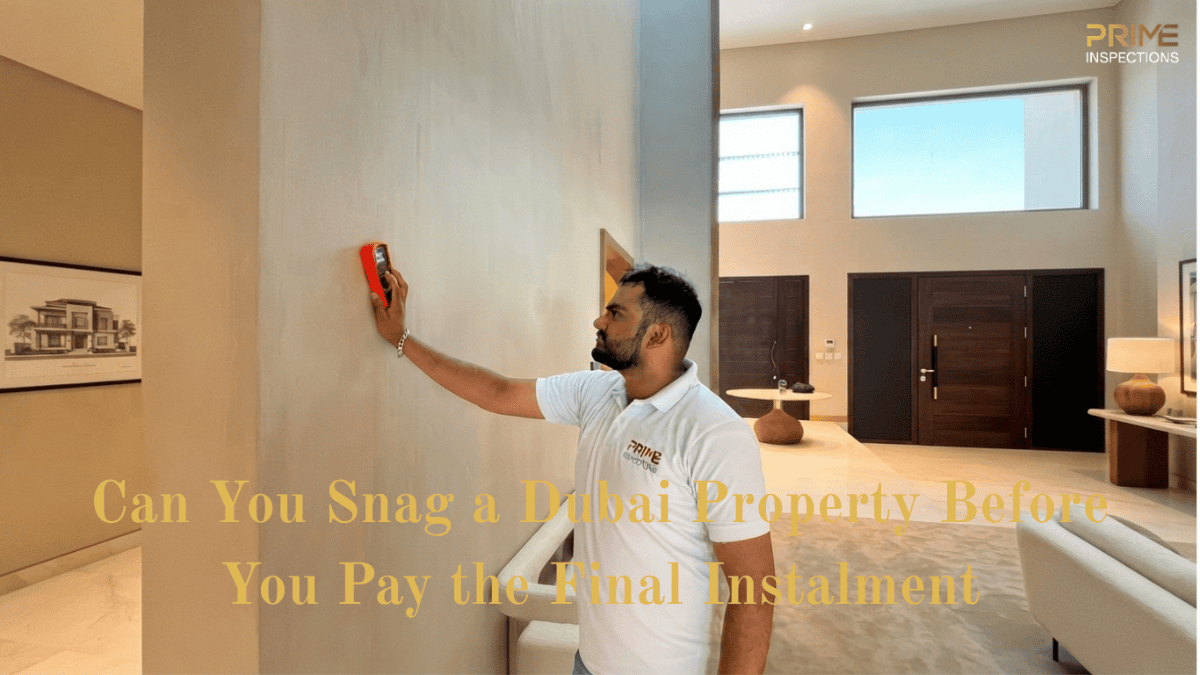
The call came in on a Sunday, from the owner of a two bedroom apartment in a Business Bay tower who had just received his handover notice and his final instalment demand in the same email. The appointment was set for Thursday. He had already decided he would not transfer the balance until somebody had been inside the unit, and he wanted to know whether that was a reasonable position to take. What he had not realised was that the money was never the part of the transaction protecting him. The form waiting for him on Thursday was.
There is no statutory right in Dubai to inspect an off plan unit before paying the final instalment. Your right is contractual and comes from your SPA, so ask your developer in writing. Keep your payment on schedule. Your real protection is the handover acceptance signature, not the money.
What Your SPA Actually Governs
There is no law in Dubai that gives you the right to walk into your unit before you pay, which means the answer is sitting in your own contract.
A standard Dubai off plan Sale and Purchase Agreement typically contains three things that matter here. A snagging clause, usually referencing a joint inspection and a written snag list. Payment milestones tied to a construction percentage or a named milestone. And a definition of handover.
That third one is the sleeper. Some SPAs define handover as the moment notice is served on the buyer. Others define it as the unit being ready for occupation. Those are not the same date, and the difference decides when your obligations trigger and when your one year clock starts running.
One honest limitation. Reviewing the SPA clause guidance published by offplandisputes.ae, we could not find clause language establishing an unconditional right to inspect before payment. SPA terms are not public and vary by developer and project vintage, so nobody can tell you what your contract says except your contract.
Open it and read three things before you do anything else. The snagging clause, the final payment trigger, and the handover definition.
What Dubai Developers Actually Allow
We looked for a published pre handover inspection policy from every major Dubai developer, and we could not find one.
Across Emaar, DAMAC, Nakheel, Sobha Realty, Danube, Azizi, Meraas and Dubai Properties, no written third party inspection policy could be located in public sources. Several handover guides name these developers only as market players, and none documents developer specific variations. That absence is itself the finding, and it means practice varies by project and coordinator rather than by brand.
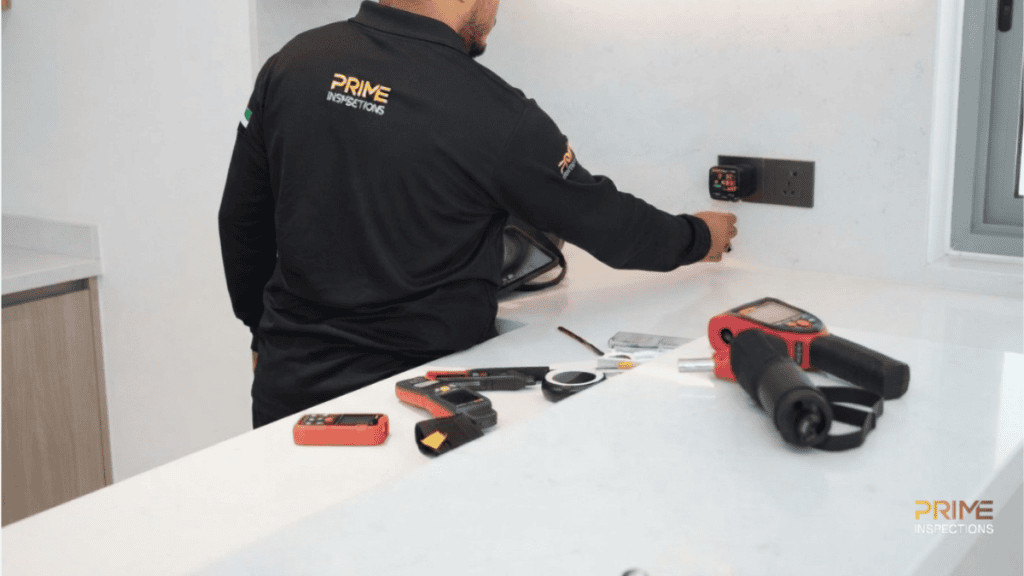
What can be said with support is narrower. EGSH reports that developers generally permit one or two inspection visits before the handover meeting. DAMAC publishes a buyer facing blog covering handover and snagging, indicating it treats third party snagging as normal. Sobha publishes an internal snagging methodology describing a multi step clearance procedure before handover approval, though that is group content and should be read as indicative of philosophy rather than a buyer facing policy for Sobha Realty in Dubai.
The written request to send your handover coordinator
Keep it to three questions, in plain English.
Is a third party inspection permitted before the acceptance signature. How many visits are allowed. And how should the snag list be submitted.
Send it by email rather than raising it on the phone, because the answer you receive in writing is the only version that will still exist in six weeks.
What Usually Happens in Practice
Dubai sources do not agree on whether snagging comes before or after the final instalment, and pretending otherwise would not help you.
The common pattern is well supported. The developer issues the handover notice, requires the final instalment and all fees cleared, and only then schedules the appointment at which keys are released and the acceptance form signed. Snagging is generally accommodated at or immediately before that appointment rather than weeks ahead of payment.
Now the disagreement, with both sides named. Property Finder and Tohid Fetrat place snagging before final payment. SBA Properties sequences payment at days 1 to 14 and snagging at days 14 to 21. UAE Expert Hub places snagging after or concurrent with payment, explaining that many buyers pay and inspect close together so serious issues surface while the developer still has a strong incentive to resolve them. Dealr and EGSH place snagging before the handover certificate without taking a position on payment.
That is genuinely unsettled across credible Dubai sources. It depends on your SPA and on how your developer’s handover portal is sequenced. The fixed point in all of it is the signature.
Check availability for your handover appointment week before you agree a date, not after.
Why Withholding the Final Instalment Is Dangerous
Almost every buyer thinks about it, so it is worth knowing exactly what happens if you do.
The instinct is understandable. You have paid 90 or 95 percent of the price for something you have not seen, and the balance feels like the only leverage you hold. It is not, and the mechanism that applies is specific.
The governing provision is Article 11 of Dubai Law No. 13 of 2008 regulating the Interim Real Property Register, as amended by Law No. 9 of 2009 and Law No. 19 of 2017, in force from 18 October 2017. The process, as documented by Dealr, runs in five steps.
The developer notifies the Dubai Land Department on the prescribed form, setting out the breach.
DLD serves a written notice giving the buyer 30 days to cure the default.
DLD attempts an amicable settlement during the notice period. If one is reached it becomes an addendum to the sale agreement.
If the default is uncured after 30 days, DLD issues an official document certifying the project’s completion percentage using RERA standards.
The developer may then exercise its remedies without a court order.
The retention caps by completion percentage
| Project completion | Developer may retain | Refund timeline |
| Over 80 percent | Up to 40 percent of unit value, or the developer may pursue a DLD public auction | Within one year of termination or 60 days of resale, whichever is earlier |
| 60 to 80 percent | Up to 40 percent of unit value | Same |
| Under 60 percent | Up to 25 percent of unit value | Same |
| Construction not commenced | Up to 30 percent of amounts paid | Within 60 days of termination |
Figures as published by dealr.ae.
Read that table against your own position. A buyer at the final instalment stage is by definition at or near 100 percent completion, the harshest tier on it. Withholding the final payment to force an inspection exposes you to termination with up to 40 percent of unit value retained, or a DLD public auction of the unit you have almost finished paying for.
This article does not advise withholding payment under any circumstances. If you believe you have a genuine contractual dispute with your developer, take qualified legal advice on your own contract rather than simply missing a payment date.
The Acceptance Signature Is Your Real Lever
The money was never the part of this transaction that protected him.
Paying the final instalment does not waive your defect rights. Signing a handover acceptance form that records the unit as accepted in its current condition is what damages your position, and it is the date your unit level installations clock attaches to.
Keys are logistics. The signature is the legal event.
Dealr puts it plainly, that signing without inspection means accepting the unit as it stands. UAE Expert Hub cautions specifically against signing the handover acceptance as though the unit were complete. Both are describing the same moment.
On refusing handover, here is the honest picture. prelaunch.ae states that a buyer has a legal right to refuse handover until substantial defects are rectified, while noting that refusal over minor cosmetic issues may be deemed unreasonable. That is a commercial site rather than a statute, and the underlying basis is general contract law on conformity of delivery. Under the old UAE Civil Code, Federal Law No. 5 of 1985, Articles 569, 572 and 574 required delivery exactly as agreed and allowed a buyer to demand rectification or cancellation where the developer did not remedy within a reasonable time.
So treat refusal as a contractual remedy that carries risk, not a clean right you can exercise at the desk. If you are considering it, take legal advice first.
That Business Bay owner did none of it the hard way. He paid on the Tuesday, we inspected Wednesday morning, the report reached him that evening, and on Thursday he signed subject to the attached snag list. Contract clean, leverage intact.
What to Write When You Sign
You are almost never choosing between signing and not signing. You are choosing between signing clean and signing with a list attached.
Sign subject to the attached snag list, dated, referencing the inspection report by name and date. Attach the list, or reference the submission already made in the developer’s own portal. Keep your own copy of exactly what you handed over, with a timestamp.
If the coordinator will not accept an annotation, note the report reference beside your signature and email the identical wording to the coordinator the same day. Either way there is a written record, which is the whole point.
One caution. The wording on a handover acceptance form is a contractual matter. We are inspectors, not lawyers, so if you are unsure about what you are signing, take qualified legal advice before you sign it.
The Defects Liability Period Is Your Backstop
Whatever happens at the appointment, two liabilities survive it, and almost every Dubai page describes them incorrectly.
The source is Dubai Law No. 6 of 2019 concerning ownership of jointly owned real property, Article 40. There are two separate liabilities with two different start dates.
Structural, ten years. The developer remains liable for ten years from the date of obtaining the completion certificate of the project to remedy or rectify any defects in the structural parts of the jointly owned real property.
Installations, one year. The developer remains liable for one year from the date of handover of the unit to the owner for repairing or replacing defective installations, which the law describes as including mechanical and electrical works, sanitary and sewerage installations and similar installations.
There is a carve out worth knowing. Where the owner delays taking possession, the one year installations period runs from project completion rather than from actual handover.
And an honest note. Commentary in the Dubai market differs on the exact start of the one year period, with several published pages stating it runs from the building completion certificate date. The safe assumption for a buyer is the earlier of the two dates, which means treating your one year window as shorter rather than longer and planning your follow up inspection accordingly.
If a developer will not engage, the escalation route runs in order. Written escalation to the developer, then a RERA filing through the Dubai REST app or a DLD Customer Happiness Centre, then the DLD Real Estate Disputes Centre, then the Dubai Courts Real Estate Court. RERA publishes no mandated snagging period, no mandated inspection right and no defect count benchmark.
On escrow, briefly and honestly. Buyer funds sit in a project escrow account under Dubai Law No. 8 of 2007. Two Dubai sources, UAE Expert Hub and Dealr, report that 5 percent of project value is retained in escrow for one year after completion or registration as a defect guarantee. We could not trace that 5 percent figure to the primary law text, so treat it as commonly reported rather than as a stated legal right.
What changed on 1 June 2026, and what did not
Decennial liability historically sat in Federal Law No. 5 of 1985 at Articles 880 to 883, and you will still see those numbers quoted widely.
Federal Decree-Law No. 25 of 2025, the new Civil Transactions Law, took effect on 1 June 2026 and replaced the 1985 Civil Code in its entirety, with the decennial liability provisions renumbered to Articles 821 to 824. Decennial liability remains, and remains non excludable by contract. We are citing the renumbering and the effective date, and claiming nothing beyond that.
If You Are Overseas or Using a Power of Attorney
The highest risk handover we see is the one where the owner is not in the country.
Handover by Power of Attorney is completely normal in Dubai. The risk is narrow and specific, that the POA holder attends the appointment and signs the acceptance form before anybody has read a report.
Instruct them in writing before the appointment. They may collect keys and complete formalities, but must not sign the acceptance form clean, and if they have to sign, it is subject to the attached snag list.
Our inspector can attend alongside a POA holder, and the report can reach an overseas owner the same evening, which usually keeps the appointment and the protection in the same week, delivered on the same 24 hour turnaround as any other inspection.
Frequently Asked Questions
Does paying the final instalment mean I accepted the property? No. Payment does not waive your defect rights. Signing the handover acceptance form is what records your acceptance of the unit’s condition, which is why the signature matters more than the transfer.
What happens if I do not pay the final instalment? Article 11 of Dubai Law No. 13 of 2008 applies. The developer notifies DLD, you receive 30 days to cure, and remedies then follow without a court order, including retention of up to 40 percent of unit value.
Can I refuse to accept handover in Dubai? Refusal over substantial defects is described as a contractual remedy rather than a clean statutory right, and refusal over minor cosmetic items may be treated as unreasonable. Take legal advice before attempting it.
Can I snag after I have already signed the handover certificate? Yes. The one year installations liability still runs from your unit handover and the ten year structural liability from the completion certificate. You have less leverage and the same repairs to chase.
Getting the Inspection Done Before You Sign
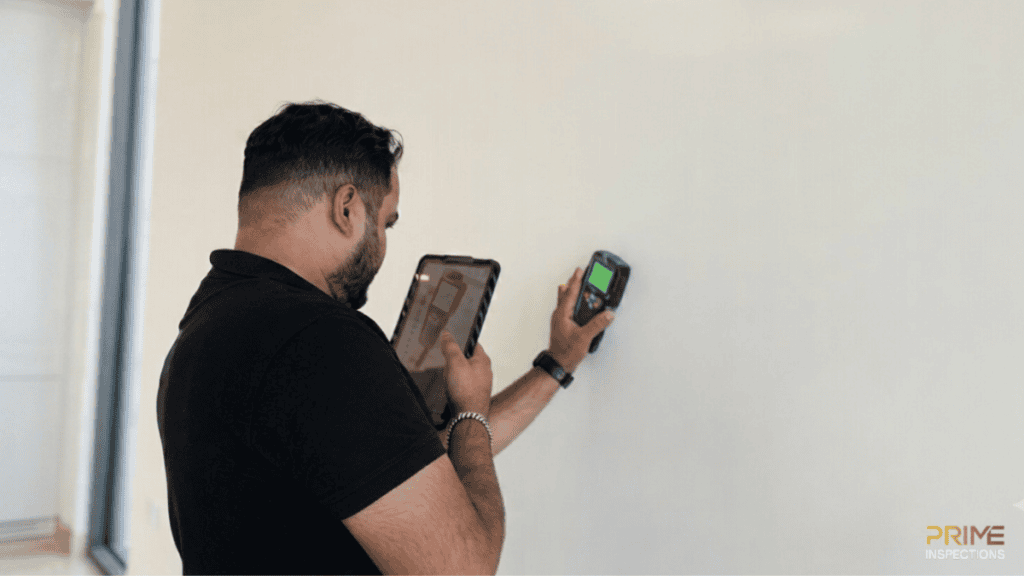
We hold same week slots through handover season, run a 250 plus checkpoint handover inspection, and deliver the report within 24 hours so the list can be attached at your appointment.
We carry out no repair work, so nothing in your report becomes an invoice from us. Prime sells the answer, never the work.
Book my handover inspection before I sign. Call +971 50 602 1830 or email connect@primeinspections.ae to talk to our team about your handover appointment date.