How to Get a Developer to Honour the Defects Liability Period

It was 7:50 on a Thursday morning in February, in a four bedroom villa in Mudon.
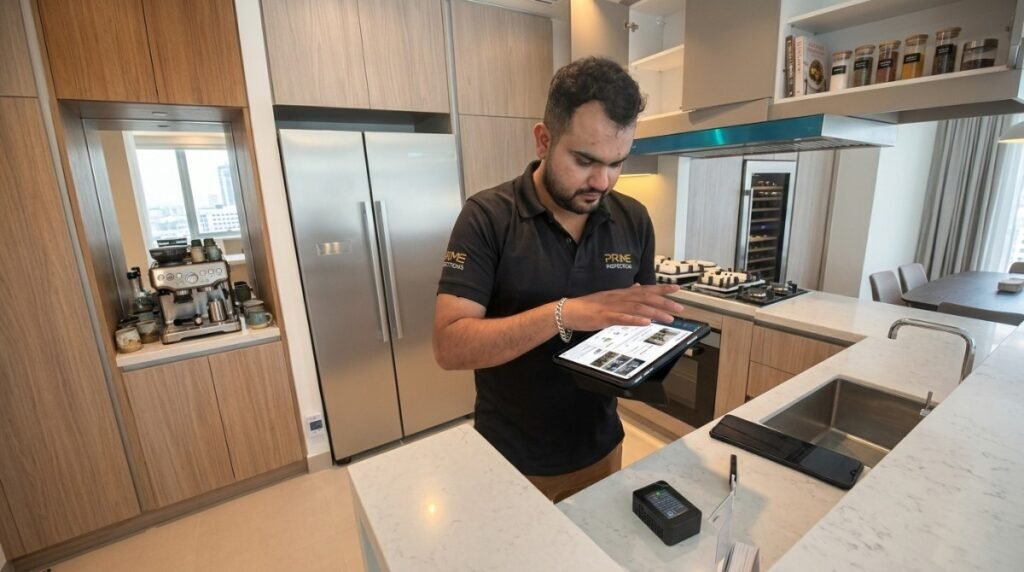
Farhan was setting up the thermal camera in the family room while the owner made coffee. He had moved in ten months earlier.
Since then he had opened five tickets with the developer. A damp patch on the stairwell wall. A sliding door that dragged. Two AC zones that never reached set point.
Two visits had happened. Nothing had been fixed.
“We have about eight weeks left,” he said. “How do I get them to honour the defects liability period before the year is up?”
This is one of the most common calls we get in the last months of the DLP. Here is what has helped owners we have inspected for, calmly and on time.
To get a developer to honour the defects liability period in Dubai, record every defect with photos and dates, get an independent inspection before the DLP ends, send a formal written notice that lists each item and asks for dates, follow up in writing, and escalate to the Dubai Land Department if nothing happens.
What the Defects Liability Period Covers in Dubai
We keep the definition short here. Our full guide to the defects liability period in Dubai goes deeper.

One year for installations and non-structural defects
The defects liability period (DLP) commonly covers mechanical, electrical, plumbing and drainage installations, plus non-structural defects, for one year.
Dubai Law No. 6 of 2019 on jointly owned property is commonly summarised, in Article 40, as placing a one year repair duty on the developer for installations from handover. Many Sale and Purchase Agreements (SPA) set out the same cover, and some extend it.
Ten years for structural defects
Structural defects carry a much longer liability of ten years. Under Dubai Law No. 6 of 2019, law firm summaries describe the developer as liable for structural parts for ten years from the completion certificate.
Separately, the UAE Civil Transactions Law was replaced by Federal Decree-Law No. 25 of 2025, in force from 1 June 2026. The new law keeps the ten year rule for serious structural defects, with contractor and engineer liable towards the party that hired them.
In plain terms: one year for most everyday defects, ten years for the serious structural ones.
When does the clock start?
Sources differ. Some link the one year period to your handover date. Others link it to the building completion certificate, which can come earlier.
The safe rule is simple. Check your SPA and handover documents, assume the earlier date applies, and plan around it.
Speak to a lawyer for your specific contract.
Start With Evidence, Not Anger
Frustration is understandable after months of tickets. But if you want a developer to honour the defects liability period, records do more than tone.
Keep a defect log from day one
One folder. One simple spreadsheet. For every defect, note the date found, the room, a photo, the ticket number and the developer’s reply.
It feels tedious at first. By month ten, it is the most useful document you own.
Book an independent inspection around month 9 to 11
We see the most calls in the last eight weeks of the DLP. By then there is little time for a visit, a repair and a check.
Around month nine to eleven works far better. It leaves room to send a notice, wait for the developer’s engineer, get repairs done and re-check before expiry. That timing is the single biggest difference we see between claims that move and claims that stall.
We follow a 250+ checkpoint scope, with thermal imaging, moisture meters and AC performance checks. The report arrives within 24 to 48 hours.
If you are in month nine or later, this is a good time to book an end of DLP inspection.
What the evidence pack should contain
- Your ticket history and every developer reply
- The independent inspection report
- Dated photos and any moisture or temperature readings
- The defects clause from your SPA
- Your handover form and original snag list
How to Send a Formal Defect Notice That Gets Read
A ticket is a request. A formal notice is a record, and it is the main tool owners have to get a developer to honour the defects liability period. The difference matters as the year closes.
Step by step
- Address it to the developer’s customer care and the community or handover team, using the official email or portal.
- Reference your unit, your SPA and your handover date.
- List each defect with a number, location, photo reference and any existing ticket number.
- State clearly that every item is being raised within the defects liability period.
- Ask for an inspection date and a written repair programme within a reasonable time, for example 14 days.
- Attach the independent report.
- Send by email and keep proof of delivery. If your SPA asks for written notice, courier a printed copy as well.
The 14 days is your request, not a legal deadline. It simply gives both sides a date to work towards.
Sample wording
Many owners adapt something like this:
“We are writing about the defects listed in the attached report for our villa, handed over in April. All of these items are being raised within the defects liability period under our SPA. Several were first reported under the ticket numbers shown. We would be grateful for an inspection date and a written repair programme within 14 days.”
Tone matters
Firm, polite and factual. No threats. No legal phrases you would not be comfortable explaining. A calm notice is easier for the developer’s team to act on and easier for anyone else to read later.
If the Developer Still Will Not Honour the Defects Liability Period
Most notices get a response. Some do not. Here is the next layer.
Follow up in writing on a schedule
Send a reminder the day after your requested date passes. Send a second reminder a week later. Keep every reply, even the short ones.
A clear paper trail shows that the defects were raised in time and that you gave a fair chance to repair.
Common pushbacks and how to answer
“It is wear and tear.” Ask for their inspection finding in writing. An independent report often notes installation causes where they are visible, such as poor sealant or missing waterproofing.
“It is owner damage.” Point to your handover condition and the dated report.
“We fixed it.” If the defect returns, the fix was temporary. Ask for a permanent repair and book a re-check.
Escalation route in Dubai
Buyer and developer disputes go to the Dubai Land Department, which offers an amicable settlement route. If that fails, the matter can go to Dubai Courts, or to arbitration if your SPA has an arbitration clause.
The Rental Disputes Centre handles tenancy matters and certain jointly owned property disputes. It is not the forum for your sale contract.
Should you hire your own contractor?
Only with legal advice, and only after written notice and a fair chance for the developer to repair. Fixing it yourself can remove the evidence and weaken the claim, especially for a hidden or latent defect where the cause is the whole argument.
Speak to a lawyer for your specific contract.
What Happened in the Mudon Villa
Back in Mudon, Farhan worked through the villa with the thermal camera and the moisture meter.
The damp on the stairwell wall was not coming from the wall. It was coming from a roof terrace drain two metres away, where the sealant had failed. The readings tracked it step by step.
The two AC zones had low airflow. The return paths were undersized for the rooms they served.
The full report arrived in under 48 hours. It listed 41 items, each with photos, readings and locations.
That same week, the owner sent a formal notice by email and by courier. He referenced his five ticket numbers, attached the report and asked for an inspection date within 14 days and a written programme. He noted that every item had been raised within the defects liability period.
Damp patches and leaks are often the hardest items to prove. A water leakage inspection can show where the water is coming from, which is usually what moves a developer.
Unit Defects vs Common Area Defects
Who you notify depends on where the defect is.
Your unit
For anything inside your unit boundary, you notify the developer directly. That covers walls, floors, fittings, your AC and your plumbing inside the unit.
Common parts
Under Dubai Law No. 6 of 2019, common parts are handled through the owners association and the management company. That includes building roofs, facades, lifts and shared pools. The management company raises those defects with the developer.
For an apartment owner, report a common area issue to the community manager in writing and keep a copy.
In villa communities, check your title plan. A roof on your own villa is usually yours to report. A boundary wall or shared landscaping may not be.
What If the DLP Ends With Defects Still Open?
It happens, even to careful owners.
Items you raised in writing before the period ended should still be followed up. Your notice, proof of delivery and the developer’s replies are the record that they were raised in time.
New non-structural defects found later are usually harder to claim. Serious structural defects can fall under the ten year liability. Our guide on snags after the DLP has expired covers the options.
Speak to a lawyer for your specific contract.
Frequently Asked Questions
What does the defects liability period cover in Dubai?
It commonly covers non-structural defects and installations such as electrical, plumbing, drainage and AC for one year, with structural defects covered for ten years. Your SPA sets the exact terms and may offer longer cover, so read the defects clause alongside your handover documents before you raise anything.
When does the defects liability period start?
Sources differ. Some link the one year period to your handover date, others to the building completion certificate. Check your SPA and handover documents, and if it is unclear, assume the earlier date applies and plan your inspection and notice around it. That way you are never caught out.
What if my developer does not fix defects during the DLP?
Send a formal written notice that lists every defect, references your tickets and asks for an inspection date and repair programme. Follow up in writing. If nothing happens, raise it with the Dubai Land Department, then Dubai Courts or arbitration if your SPA says so. Speak to a lawyer for your specific contract.
Does reporting a defect before the DLP ends protect my claim?
A clear written report sent before the DLP ends is strong evidence that the defect was raised in time. It does not guarantee an outcome, but it is far better than a phone call. Keep the notice, the proof of delivery and every reply together in one place.
When should I book an end of DLP inspection?
Around month nine to eleven works well. It leaves time to send the notice, wait for the developer’s visit, get repairs done and book a re-inspection before the period ends. Leaving it to the final weeks makes every step tighter and much harder to complete properly.
Can I hire my own contractor and charge the developer?
It is risky to do this without first giving the developer written notice and a fair chance to repair. Fixing it yourself can remove the evidence and weaken the claim. Get legal advice before you go ahead. Speak to a lawyer for your specific contract.
Who is responsible for common area defects?
Defects in common parts such as building roofs, facades, lifts and shared pools are usually raised through the owners association and the management company, which deal with the developer under Dubai Law No. 6 of 2019. Report them to the community manager in writing and keep a copy.
My property is rented. Can I still claim under the DLP?
Yes. The DLP belongs to the owner, not the occupant. Ask your tenant to report defects to you with photos, arrange access for the inspection and the developer’s visits, and send the formal notice yourself or through your property manager. Keep the tenant’s reports with your evidence pack.
How the Mudon Story Ended, and How We Can Help
The developer’s engineer visited nine days after the notice.
The roof drain and the AC were fixed within a month. The sliding door and the finishing items followed.
After the DLP ended, Farhan’s re-inspection found two items had reopened. Because they were on the original notice, the developer came back for them.
Not every case moves this smoothly. This one did because the paperwork was clear and early.
As Mohammed Nadeem Maldar, our Engineering Manager, says: “The DLP is part of what an owner paid for. Our job is only to make sure every defect is written down clearly while it still counts.”
Prime Inspections & Snagging is independent. Our RERA certified, DLD approved inspectors have carried out more than 73,000 inspections. We do not repair anything. We just make sure nothing is missed.
If your defects liability period ends in the next few months, we can inspect the home and give you a dated report to send with your notice.
Inspections start from AED 3,999 for a villa, AED 2,799 for a townhouse and AED 1,499 for a two bedroom apartment. A villa leak survey starts from AED 1,999. All prices exclude VAT. A re-inspection is booked as a separate visit, so ask for the fee when you book.
Call +971506021830 or book an inspection before your DLP ends. Our office is in Business Bay, and we are glad to check a date with you.